
Woven vs. Knit: Selecting a Textile Mill for the Fabric You Need
Choose manufacturing capability by construction, preparation, finishing, and evidence—not by a supplier’s fabric photographs.
By Style Serum Editorial Desk · · Edited by Sukhvinder Jabbal
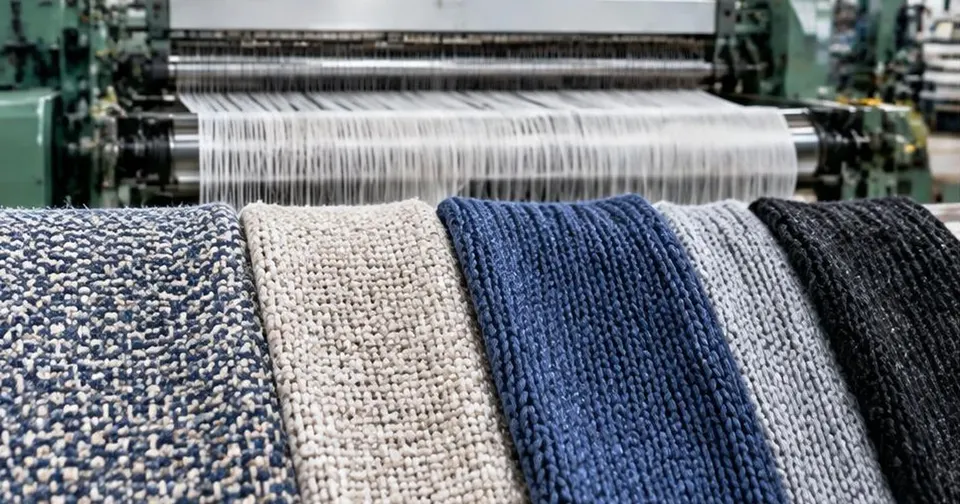
Start with fabric architecture, not a mill label
Choosing between a weaving mill and a knitting mill is a product-engineering decision before it is a purchasing decision. Woven fabrics interlace lengthwise warp yarns with crosswise weft yarns; knitted fabrics intermesh yarns into loops. These structures influence stretch, stability, surface, and manufacturing requirements. CottonWorks explains the structural distinction in its weaving basics guide and knit basics guide.
Neither category guarantees a particular performance level. An elastane-containing woven can stretch, and a compact knit can be relatively stable. Begin with intended use: garment shape, required movement, opacity, handle, care instructions, and appearance after use. Translate these expectations into a specification before comparing mills. Otherwise, suppliers may quote different constructions under the same commercial fabric name.
Match woven designs to preparation capability
For woven sourcing, specify fiber composition, yarn characteristics, weave, finished width, and finished mass per area. CottonWorks identifies plain, twill, and satin as the three basic weave designs. Its explanation also connects fabric design to the drawing-in draft and the sequence of harness movement. A mill therefore needs more than a loom that can produce the nominal width: it needs suitable design, preparation, and production controls. See CottonWorks on woven construction.
Ask who performs warping, sizing where needed, and drawing-in or tying-in. CottonWorks describes warp preparation as warping, slashing, and drawing-in or tying-in, explaining that warp yarns face tension and abrasion during weaving. Its warp preparation reference is a useful basis for questions about yarn suitability, beam scheduling, preparation ownership, and troubleshooting. Outsourcing these activities is not automatically a weakness, but undisclosed outsourcing makes responsibility harder to establish.
A supplier offering a very small woven order may be using an existing warp or available greige fabric rather than preparing a dedicated construction. That can be commercially sensible. Establish whether repeat orders will use the same yarn, construction, and preparation route, and whether a custom color can be applied without changing the agreed base fabric.
Match knits to machine and finishing competence
CottonWorks distinguishes weft and warp knitting and discusses knit, tuck, and float stitches. These are meaningful capability questions, not interchangeable marketing terms. Ask the supplier to identify the machine family and construction used for your sample, and to explain which yarn and machine variables it controls. Use the CottonWorks knit fundamentals overview to frame that discussion without treating introductory material as a production recipe.
For a knitted development, agree on finished width and mass, stretch and recovery expectations where relevant, dimensional stability, and acceptable appearance. Ask how relaxation and finishing are handled, who owns those operations, and what evidence connects the finished sample to the proposed bulk route. A soft hand in an unfinished swatch does not establish the hand or dimensions of delivered fabric.
Avoid qualifying a knit supplier solely through a machine list. Relevant experience includes the proposed fiber blend, yarn type, structure, color process, and finishing route. Request comparable production records that the mill is authorized to share, plus a representative trial rather than confidential information from another customer.
Investigate the complete manufacturing route
Map yarn sourcing, fabric formation, preparation, dyeing or printing, finishing, inspection, and packing. Record each operating site and subcontractor. Determine whether your contact is the manufacturing site, a converter coordinating several sites, or a trader. Each model can work, but the purchase agreement should make quality ownership and change approval explicit.
Use the same request for quotation for every candidate. Include the reference sample, construction specification, testing requirements, shade approval process, quantity by color, delivery basis, and documentation requirements. Ask suppliers to identify assumptions and exclusions. A quote based on available stock is not directly comparable with a dedicated yarn-to-finished-fabric order.
Qualify samples and control changes
Use staged approvals: technical review, development sample, representative processing trial, and bulk release. Label each approved sample with construction, color, finish, date, and supplier reference. Preserve a control sample and require written approval before changing yarn source, processing site, or finishing route when those changes could affect performance.
Agree on test methods and acceptance criteria based on end use rather than adopting a universal textile pass mark. Include inspection rules and how disputed results will be reviewed. Your final decision should connect demonstrated fabric performance with a credible production route, realistic minimums, and accountable quality management. The best mill is the one that can reproduce the specified fabric—not simply the one whose machinery sounds most impressive.
For the final shortlist, ask each candidate to describe how it would investigate a repeat-order discrepancy. Look for retained specifications, identifiable lots, accessible process records, and a named decision-maker. This practical exercise tests accountability without requiring disclosure of proprietary machine settings or another customer’s confidential production information.
Continue the analysis
This discussion connects with Textile MOQ and Fabric Costing: Compare Orders on a Usable-Fabric Basis and Wet Processing and ZDHC: Qualifying a Mill’s Chemical Management. Explore the full Textile Manufacturers section for related coverage.
Editorial note: This is source-based explanatory analysis, not firsthand reporting or a supplier audit. The cover is an AI-generated editorial illustration, not a photograph of a named company, designer or event.
Style Serum Editorial Desk
Source-based industry explainers
Explanatory analysis prepared from the official sources cited in each article. No original interviews or supplier audits are implied.
Reviewed by
Sukhvinder JabbalContributing Editor, Styling & Trends
NIFT-certified high-fashion and corporate stylist in Bengaluru with about eight years in runway, editorial, menswear and wardrobe styling.
More in Textile Manufacturers
How to Find Clothing Manufacturers in India: A Buyer's Guide
Style Serum Editorial Desk ·
Textile MOQ and Fabric Costing: Compare Orders on a Usable-Fabric Basis
Style Serum Editorial Desk ·

Wet Processing and ZDHC: Qualifying a Mill’s Chemical Management
Style Serum Editorial Desk ·