
How to Find Clothing Manufacturers in India: A Buyer's Guide
Where India's garment clusters are, how to shortlist a manufacturer, which documents to check and what to ask before sampling: a practical sourcing guide for fashion brands.
By Style Serum Editorial Desk · · Edited by Sukhvinder Jabbal
Start with what you are making
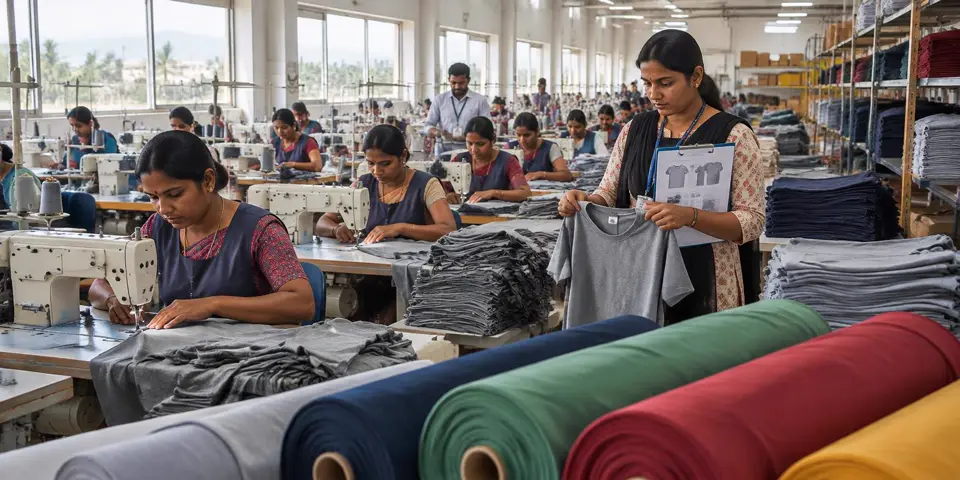
Before you search for clothing manufacturers in India, write down exactly what you need. Manufacturers specialise, and the right factory for organic cotton T-shirts is rarely the right one for embroidered lehengas or washed denim. A one-page brief saves weeks of back-and-forth and gets you comparable quotes.
- Product and construction: knit or woven, the main fabrics, and any embellishment, printing or washing.
- Quantities: units per style, per colour and per size, for the first order and for repeats.
- Price basis: CMT (cut, make and trim, where you supply the fabric) or FOB / full package (the factory sources materials and delivers to the port).
- Quality and compliance: the testing standards, certifications and social-compliance audits your retailers ask for.
- Timeline: when you need samples, and when stock must land.
If you are still choosing fabric, our guide to selecting a woven or knit mill explains how the two supply chains differ.
Know India's garment manufacturing clusters
India's apparel industry is organised in regional clusters, each with its own strengths. Searching by cluster is often faster than searching the whole country.
- Tiruppur, Tamil Nadu: the country's cotton knitwear hub. The Tiruppur Exporters' Association reports knitwear exports of ₹44,747 crore from Tiruppur in 2024-25, about two-thirds of India's knitwear exports by value (Tiruppur Exporters' Association). T-shirts, polos, sweatshirts, innerwear, kidswear and activewear are typical.
- Ludhiana, Punjab: woollen and acrylic knitwear, sweaters, shawls and winter wear, alongside hosiery.
- Delhi NCR (Noida, Gurugram, Okhla and Faridabad): woven fashion for export, such as womenswear, dresses and embroidered or embellished garments, with many export houses that have in-house design teams.
- Bengaluru, Karnataka: large woven and knit factories producing menswear, shirts, trousers and denim for international brands.
- Mumbai and its surroundings: fashion and ethnic wear, denim washing and a dense network of fabric traders.
- Jaipur, Rajasthan: hand block printing and printed cottons. Sanganeri and Bagru hand block prints are registered Geographical Indications.
- Surat, Gujarat: man-made fibre fabrics, sarees and dress materials; more fabric than finished garments.
- Kolkata, West Bengal: a large domestic centre for innerwear, menswear basics and kidswear.
The government is also building seven PM MITRA textile parks, in Virudhunagar (Tamil Nadu), Warangal (Telangana), Navsari (Gujarat), Kalaburagi (Karnataka), Dhar (Madhya Pradesh), Lucknow (Uttar Pradesh) and Amravati (Maharashtra), with a scheme outlay of ₹4,445 crore up to 2027-28, according to the Ministry of Textiles (Press Information Bureau). They are worth watching for future capacity, but check whether a specific factory is operating before you plan around it.
Where to search for garment manufacturers
- Specialist directories: our Business Directory lists garment manufacturers, textile mills and suppliers with their capabilities, certifications and minimum order quantities, and shows the date our editors last checked each profile against official sources.
- Trade fairs: meeting factories in person is still the fastest way to compare them. India's sourcing season includes Bharat Tex and the India International Garment Fair in New Delhi, and regional apparel sourcing fairs. See our guide to India's 2027 fashion trade shows and the full events calendar.
- Export promotion councils: the Apparel Export Promotion Council (AEPC) represents garment exporters and runs buyer-seller meetings; the handloom and handicraft councils do the same for craft-based products.
- Fabric and trim suppliers: a mill or trim supplier you trust often knows which factories do good work in your category.
- Referrals: ask brands of a similar size, sourcing agents and freelance production managers.
Check the paperwork before you visit
A professional manufacturer will share basic documents without hesitation. Verify them yourself on official portals rather than accepting a screenshot.
- GST registration: check the GSTIN and the legal name with the taxpayer search on the GST portal.
- Udyam registration, if the business says it is a micro, small or medium enterprise.
- Importer-Exporter Code (IEC) from the DGFT, if the factory will export for you. Our India apparel export compliance guide explains what else a shipment needs.
- Certificates: ask for the certificate number and look it up in the certification body's public database. Check the scope: a GOTS or GRS certificate covers named sites and processes, and each shipment needs its own transaction certificate. See how to verify certification scope and GOTS and GRS explained.
- Social-compliance evidence your buyers require, such as SA8000 or WRAP certification, or a recent amfori BSCI or Sedex SMETA audit. Ask to see the full report, not just a summary.
Questions to ask a clothing manufacturer
- What is your minimum order quantity per style, per colour and per size? An MOQ means little without its unit, and many factories quote per colour. Our MOQ and fabric costing guide shows how to compare quotes fairly.
- Which processes are in-house and which are subcontracted? Printing, embroidery, washing and dyeing are often done by outside units. You need to know for both quality control and compliance.
- How does sampling work, and what does it cost? Ask how many rounds are included and how long a proto, fit and pre-production sample each take.
- How do you control quality? Ask about inline and final inspections, the AQL level they work to, and whether fabric is tested in-house or by an accredited lab. See our guide to ISO and AATCC testing.
- What lead time should I plan for, from approved sample to shipment, and how does it change in peak season?
- Which kinds of brands do you produce for now? Factories may be bound by confidentiality, but they can usually describe their customers.
Sample, visit, then start small
Order samples from two or three shortlisted manufacturers on the same tech pack, so you compare like with like. Visit the factory, or hire an independent inspection agency to do so, before the first bulk order. Start with a first order you can afford to get wrong, agree payment terms in writing (a deposit, with the balance due against an inspection report, is common), and write the quality standard into the purchase order.
For manufacturers: make it easy to be found
If you run a garment factory, textile mill or supply business, buyers shortlist the companies whose details are clear: what you make, your MOQ with units, your certifications and their scope, your cluster and the markets you export to. You can list your business in the Style Serum directory. Our editors check every profile against official sources before it is published.
Style Serum Editorial Desk
Source-based industry explainers
Explanatory analysis prepared from the official sources cited in each article. No original interviews or supplier audits are implied.
Reviewed by
Sukhvinder JabbalContributing Editor, Styling & Trends
NIFT-certified high-fashion and corporate stylist in Bengaluru with about eight years in runway, editorial, menswear and wardrobe styling.
More in Textile Manufacturers
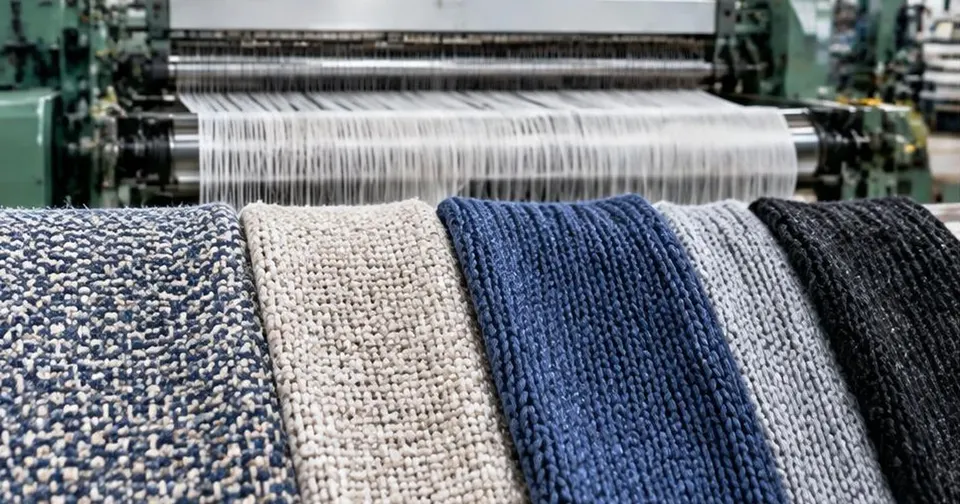
Woven vs. Knit: Selecting a Textile Mill for the Fabric You Need
Style Serum Editorial Desk ·
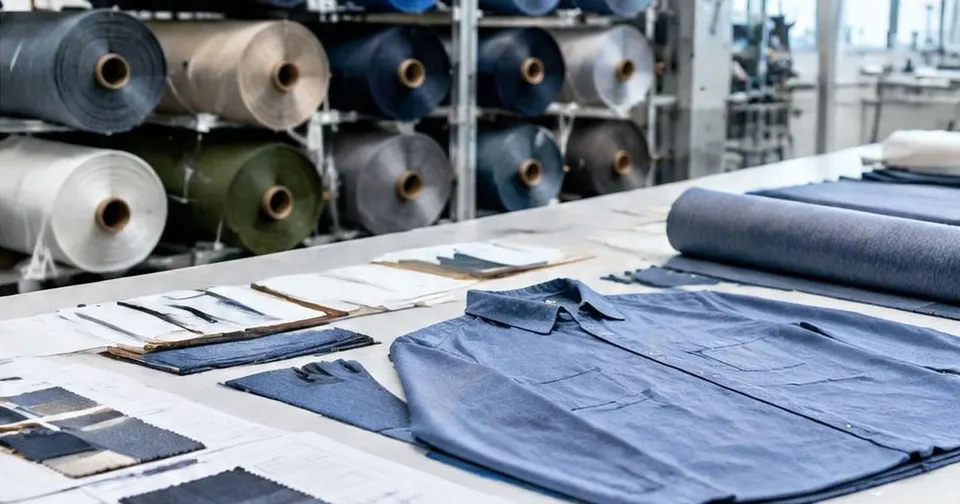
Textile MOQ and Fabric Costing: Compare Orders on a Usable-Fabric Basis
Style Serum Editorial Desk ·
Wet Processing and ZDHC: Qualifying a Mill’s Chemical Management
Style Serum Editorial Desk ·