
Textile Certification: Verify Scope, Chain of Custody, and Shipment Evidence
Separate a supplier’s certification capability from the status of purchased goods, then check the route behind the claim.
By Style Serum Editorial Desk · · Edited by Sukhvinder Jabbal
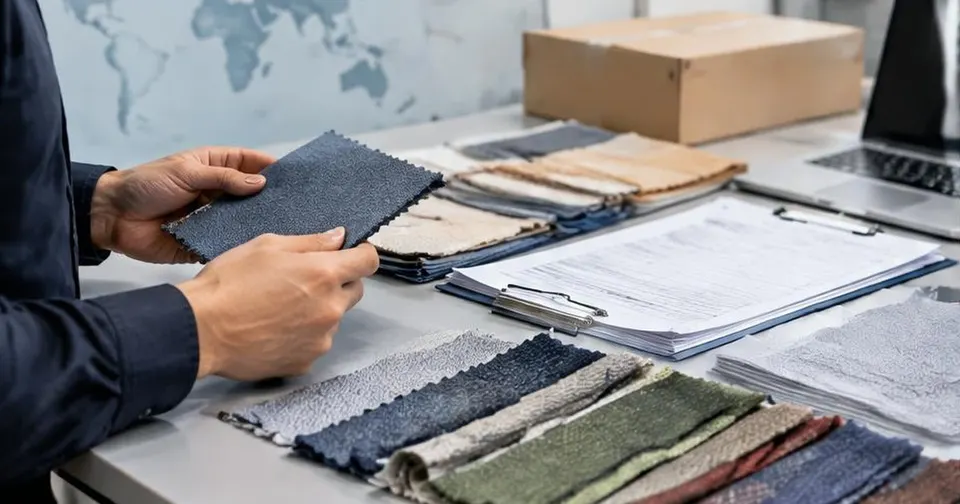
Start with the claim, not the logo
A fabric supplier can hold a valid certificate without every product it sells being certified. Qualification should begin with the exact claim you intend to make: the standard, material category, product, and intended wording. Then establish which businesses and processing steps are involved. A supplier’s presentation deck is not enough to demonstrate that a particular delivery supports your claim.
Textile Exchange explains that its Content Claim Standard underpins chain of custody across its standards system. Its chain-of-custody overview describes certification along the supply chain and the roles of scope and transaction certificates. Use that distinction to organize qualification, while checking the detailed rules, exceptions, and effective versions applicable to the actual transaction.
Understand scope versus transaction certificates
A scope certificate concerns an organization’s qualification to produce certified products within its stated scope. A transaction certificate concerns specific certified products. Textile Exchange makes this distinction in its chain-of-custody explanation. Neither document should be substituted for the other when reviewing a proposed purchase.
GOTS makes the distinction particularly explicit in its scope certificate template: a scope certificate does not prove that goods delivered by its holder are GOTS certified; that evidence is provided by a valid transaction certificate covering the goods. The template also shows product categories, process categories, validity, and supporting appendices as important parts of scope review.
Verify identity and relevant scope
Obtain the complete certificate, not a cropped first page. Match the legal entity, site address, certificate identifier, standard, issuer, validity, and appendices against the proposed supplier and processing route. Check whether the relevant product and process categories are covered. If the commercial contact is a trader or group company, resolve how that entity relates to the certified organization.
Authenticate through official verification resources or the issuing certification body using independently obtained contact details. A logo, QR code, or emailed scan is a starting point, not independent verification. Where status or scope is unclear, ask the certification body rather than interpreting an ambiguous document as approval. Record when verification occurred and what was confirmed.
Map the manufacturing chain
List the operations from material input through spinning, fabric formation, wet processing, and subsequent handling relevant to the order. Identify each site and subcontractor. Ask who retains records and how certified material is identified through storage, production, and dispatch. A certified weaving operation alone does not establish that an unrelated dyehouse’s processing is within the required chain.
Do not assume that every scheme or product uses an identical chain-of-custody model. Textile Exchange’s public explanation discusses controlled blending and segregation, and identifies a policy-specific mass-balance allowance. The safe purchasing approach is to verify the applicable model and permitted claim with the governing documents and certification body, not to infer physical traceability from a general sustainability statement.
Distinguish the standards’ substantive coverage
GOTS is not merely a synonym for organic fiber content. Its published standard includes requirements addressing textile processing alongside other criteria. The GOTS version 7.0 standard also states that it is voluntary and does not replace legal or regulatory requirements. This cited version is a documented reference, not a claim that no later version or transition applies.
Similarly, do not treat all Textile Exchange standards as covering identical environmental, social, or product-performance issues. Evaluate the named standard and its actual scope. Certified material claims do not eliminate the need for fabric testing, chemical restrictions, legal compliance checks, or ordinary supplier quality controls where those are relevant to the purchase.
Reconcile shipment evidence and control claims
Before relying on delivered goods for a certified claim, reconcile transaction evidence with the commercial and shipping records. Check the entities, product description, composition, quantities, and other identifiers required by the applicable scheme. Document discrepancies and obtain clarification or correction through the proper issuer; do not edit a certificate yourself to make it match an invoice.
Specify evidence responsibilities in the purchase order, including who arranges transaction documentation and how unresolved documentation affects release or marketing. Do not promise that a transaction certificate must always precede physical dispatch without checking the applicable issuance rules. Instead, set an agreed workflow that prevents unsupported certified claims while legitimate documentation is pending.
Finally, check the governing rules at the time of purchase. Published revisions can have future effective dates or transition periods. Separate document availability from applicability, retain the version basis for your decision, and recheck scope after meaningful supplier changes. Qualification is an ongoing chain-of-custody control, not a one-time exercise in collecting logos.
Retain an order-level evidence file linking verification records, the approved supply route, purchase documents, shipment references, and the final claim decision. If responsibility transfers between sourcing and marketing, make unresolved limitations visible. Clear handover records reduce the risk that a conditional sourcing approval becomes an unconditional public certification claim.
Continue the analysis
This discussion connects with Woven vs. Knit: Selecting a Textile Mill for the Fabric You Need and Textile MOQ and Fabric Costing: Compare Orders on a Usable-Fabric Basis. Explore the full Textile Manufacturers section for related coverage.
Editorial note: This is source-based explanatory analysis, not firsthand reporting or a supplier audit. The cover is an AI-generated editorial illustration, not a photograph of a named company, designer or event.
Style Serum Editorial Desk
Source-based industry explainers
Explanatory analysis prepared from the official sources cited in each article. No original interviews or supplier audits are implied.

Reviewed by
Sukhvinder JabbalContributing Editor, Styling & Trends
NIFT-certified high-fashion and corporate stylist in Bengaluru with about eight years in runway, editorial, menswear and wardrobe styling.
More in Textile Manufacturers
How to Find Clothing Manufacturers in India: A Buyer's Guide
Style Serum Editorial Desk ·
Woven vs. Knit: Selecting a Textile Mill for the Fabric You Need
Style Serum Editorial Desk ·
Textile MOQ and Fabric Costing: Compare Orders on a Usable-Fabric Basis
Style Serum Editorial Desk ·