
India Apparel Export Compliance: From IEC to Shipment Files
What DGFT registration and AEPC membership do—and what exporters must still verify for each order.
By Style Serum Editorial Desk · · Edited by Vasundhara Chopra
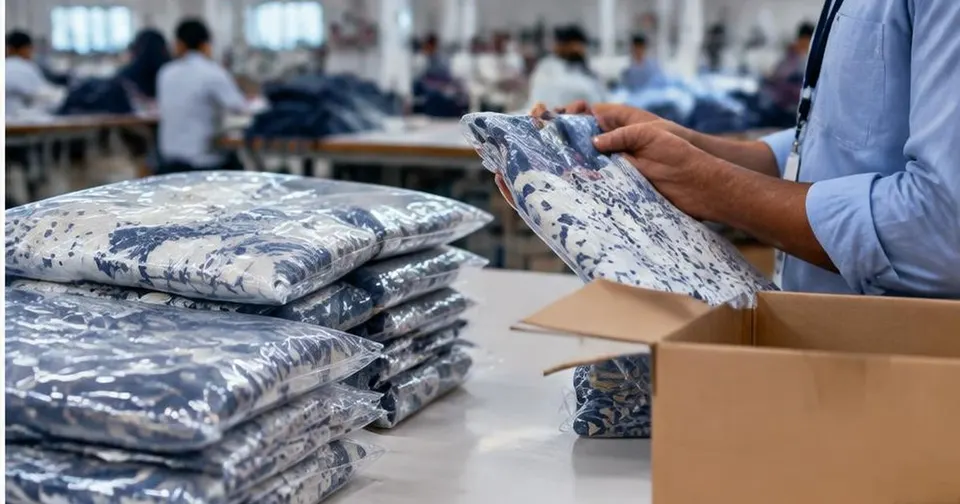
Registration is the beginning, not clearance for everything
An Indian apparel exporter needs to distinguish business identification, export-promotion registration, product classification and shipment compliance. They are connected, but none replaces the others. An IEC does not certify garment safety. An RCMC does not approve a factory’s labour practices. Council membership does not guarantee that an overseas buyer’s labelling requirements have been met.
This guide sets out a practical sequence for ordinary commercial apparel exports. It is not a substitute for checking current notifications, the exact product, destination and transaction. Samples, returned goods, restricted materials and transactions under particular schemes may require different treatment. Confirm the applicable position before making a delivery promise.
Obtain and maintain the IEC
DGFT’s IEC profile-management guidance describes the Importer-Exporter Code as the key business identification number generally mandatory for goods exports and imports unless specifically exempted. Although the IEC is the firm’s PAN after GST’s introduction, DGFT still issues it separately through an application. Possessing a PAN alone is not the same as completing that process.
The guidance identifies PAN, a bank account and a valid business address as prerequisites. Check consistency across the legal name, entity details, bank records and supporting documents before applying. Once issued, connect the IEC to the appropriate DGFT user profile and retain control of account access. A consultant may assist, but the exporter should retain its own records and authorised access.
The Foreign Trade Policy’s Chapter 2 provides for annual electronic updating or confirmation of IEC particulars during April–June, including where details have not changed. Treat this as a calendar obligation and check subsequent DGFT notices for any modified deadline or procedure. Do not confuse annual confirmation with applying for a new IEC each year.
Understand when RCMC matters
A Registration-Cum-Membership Certificate serves a different purpose. Its requirement should be assessed against the Foreign Trade Policy, the authorisation or benefit being sought and relevant exceptions. Avoid the blanket statement that every shipment of ordinary apparel is impossible without an RCMC; equally, do not assume it is irrelevant because an IEC has been obtained.
DGFT’s e-RCMC guidance says applicants declare their mainstream business and apply to the relevant registering authority. It requires an active IEC, an updated profile and an appropriate digital-signature or Aadhaar e-sign route. The stated validity is generally five financial years, with the period calculated by financial-year rules rather than simply five years from the issue date.
For apparel businesses, check the product coverage and membership category with the Apparel Export Promotion Council. AEPC’s RCMC renewal page directs applicants through DGFT and publishes financial-year-specific charges. Read the current fee schedule instead of building a budget from an old article. Certificate validity and annual council subscription obligations are not necessarily the same thing.
Classify the garment before pricing the order
Start with the actual product: knitted or woven construction, fibre composition, garment type and other classification-relevant characteristics. The FTP chapter explains India’s eight-digit ITC(HS) framework and the export-policy schedule. Check the relevant code and current policy conditions rather than assuming that a buyer’s six-digit code settles the Indian declaration.
Classification affects more than paperwork. It can influence policy treatment, duty-related calculations and eligibility under specific schemes. Where classification is uncertain, resolve it with qualified assistance before quoting on an assumed benefit. Keep the reasoning and supporting product specification in the order file, particularly when similar-looking garments have materially different construction or fibre composition.
Build separate Indian and destination checklists
For the Indian side, arrange the applicable customs filing and banking processes with the authorised bank and customs intermediary. Prepare consistent invoice, packing and transport information. Confirm the tax route, shipment declarations and any scheme-specific evidence with the appropriate adviser. DGFT registration should not be mistaken for completion of customs, GST or foreign-exchange obligations.
For the destination, identify mandatory rules separately from buyer preferences. Fibre labelling, care information, chemical restrictions, product safety and children’s clothing requirements can differ by market and product. A buyer’s technical manual may impose additional testing or social-compliance conditions. Record which requirement is law, which is contractual, and which test report supports the particular fabric or production lot.
If preferential origin is claimed, check the relevant agreement’s product-specific rules and required proof. Sewing a garment in India is not, by itself, a universal answer to every preferential-origin rule. Do not promise a tariff outcome merely because the invoice says “Made in India.”
Close the transaction with an auditable file
Before dispatch, reconcile quantities, descriptions, values, classification, consignee details and contractual terms across documents. Allocate responsibility for freight, insurance, testing, rejected goods and payment risk. Incoterms can clarify delivery obligations, but they do not replace a complete payment and dispute arrangement.
After shipment, retain declarations, transport records, certificates, test reports and payment-related evidence, and follow up on outstanding banking or scheme obligations. Recheck registrations and rules before the next order. Export compliance is a maintained system, not a folder of certificates acquired once and assumed to cover every future garment.
Continue the analysis
This discussion connects with Understanding India’s Silk Supply Chain Beyond the Sari Label and Handloom Mark, India Handloom Brand and GI: Three Different Authenticity Questions. Explore the full India Fashion section for related coverage.
Editorial note: This is source-based explanatory analysis, not firsthand reporting or a supplier audit. The cover is an AI-generated editorial illustration, not a photograph of a named company, designer or event.
Style Serum Editorial Desk
Source-based industry explainers
Explanatory analysis prepared from the official sources cited in each article. No original interviews or supplier audits are implied.

Reviewed by
Vasundhara ChopraContributing Editor, Fashion Business & India
NIFT-certified stylist with an MA in Luxury Brand Management from Regent's University London, covering fashion business, retail and Indian fashion.
More in India Fashion
Surat textile businessman gives ₹1 lakh Diwali bonuses to 20 employees
Style Serum News Desk ·
India Fashion Trade Shows 2027: Textile and Sourcing Fair Dates
Style Serum Editorial Desk ·
Handloom Mark, India Handloom Brand and GI: Three Different Authenticity Questions
Style Serum Editorial Desk ·