Handloom Mark, India Handloom Brand and GI: Three Different Authenticity Questions
A practical way to separate loom origin, scheme-defined quality and geographical identity when buying Indian textiles.
By Style Serum Editorial Desk · · Edited by Vasundhara Chopra
Start with the claim, not the logo
A textile can be handwoven without belonging to a registered geographical indication. It can carry a geographical name without that name proving every quality a shopper associates with it. It can also meet a branding scheme’s requirements without establishing that its maker received a particular wage. Authenticity becomes easier to assess when these questions are separated rather than compressed into one reassuring label.
For an Indian textile purchase, ask three things: was it woven on a handloom; does it meet an identified quality scheme; and does a geographical claim correspond to the registered product and its provenance? Handloom Mark, India Handloom Brand and geographical indications address different parts of that enquiry. None should be treated as a universal ethical or environmental certificate.
What Handloom Mark establishes
The official Handloom Mark portal describes the scheme as providing a collective identity for handwoven Indian products and assurance of loom origin. The scheme is implemented by the Textiles Committee under the Development Commissioner for Handlooms. Its central purpose is to distinguish handloom production from products misrepresented as handwoven.
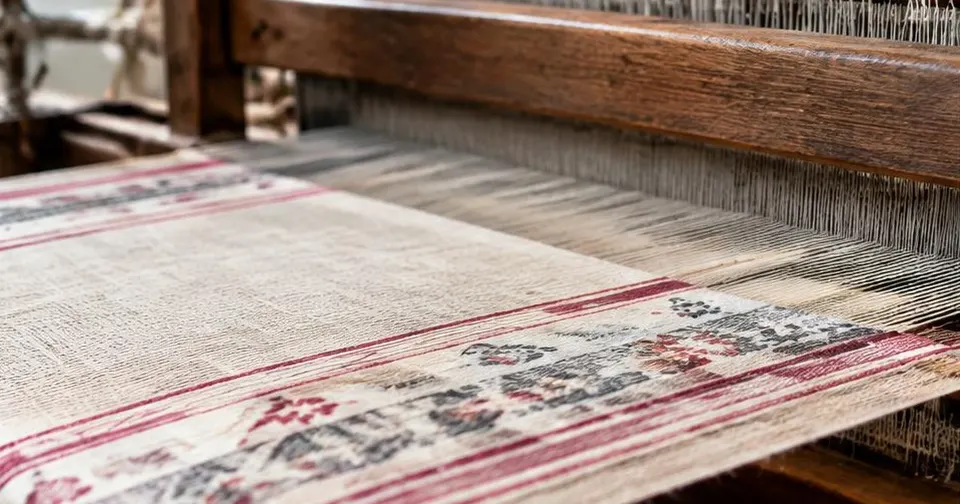
That is a meaningful but bounded assurance. A handloom claim concerns weaving, not necessarily spinning: mill-spun yarn can be woven by hand. Nor does the mark alone establish a particular fibre percentage, geographical origin, dye recipe or wage arrangement. Those claims require their own evidence. A seller should be able to explain what each accompanying label actually covers.
The portal encourages buyers to scan the label’s QR code. Use the scheme’s official verification route rather than accepting a screenshot supplied by a marketplace seller. Check whether the returned details make sense for the supplier and product being sold. If the result is missing or inconsistent, request clarification before paying; a failed scan is a reason to investigate, not a complete finding of fraud.
What India Handloom Brand adds
The India Handloom Brand background explicitly distinguishes handloom authenticity from product-quality assurance. It explains that registration applies to specified eligible entities and identified product categories meeting prescribed parameters. The scheme addresses matters including raw materials, processing, embellishment and other quality requirements, with social and environmental compliance within its framework.
Do not turn the scheme’s promotional language into a claim of zero environmental impact. Any meaningful assessment still needs the applicable standard, the registered category and the scope of compliance. A branded sari does not automatically establish that every product in the same shop qualifies, or that the entire business has passed an unrelated sustainability audit.
For verification, the scheme’s authenticity-check instructions tell customers to look for the logo and registration number and use the directory of registered users. Compare that registration with the seller’s explanation of who produced the textile. If a retailer is not the producer, ask for the link in the supply chain rather than assuming the retailer must itself be the registered entity.
What a GI protects
A geographical indication identifies goods linked to a territory through a special quality, reputation or other characteristic. IP India’s GI introduction also distinguishes the registered proprietor from an authorised user: a producer can apply to be an authorised user of a registered GI. This is not simply a decorative regional endorsement.
The precise registration matters. Read the official entry and available specification for the exact name, goods and geographical area, rather than relying on a broad description such as “heritage silk.” A GI does not, by itself, guarantee every imagined attribute of a region’s textiles. Whether particular materials or production methods are required depends on that registered product’s specification.
Nor does buying from a shop in the named region settle provenance. A retailer may sell goods sourced elsewhere. Ask who made the item, where the relevant production occurred and how the item can be traced to an appropriate producer. Authorised-user information can support that enquiry, but an authentic producer’s registration does not identify every unlabelled item on a shelf.
Build an evidence bundle before purchase
For a valuable purchase, retain the product listing, photographs of labels, registration details, invoice and the seller’s written description. Request fibre composition, dimensions, care instructions and any claims about weaving, spinning or origin on the invoice or order confirmation. If the seller promises a named regional textile, make that name explicit rather than accepting “traditional fabric.”
Treat visual clues as prompts, not verdicts. Uneven yarn, selvedges and small variations can occur in handmade cloth, but irregularity is not proof of handweaving. Conversely, a highly skilled handloom weaver can produce remarkably regular fabric. Price is similarly inconclusive: an expensive item can be misdescribed, while legitimate handwoven cloth is not confined to luxury pricing.
Choose the evidence that answers your question
For a claim about handweaving, start with loom-origin evidence. For scheme-defined quality, check India Handloom Brand registration and scope. For a protected geographical name, inspect the GI record and trace the product. For wages, organic inputs or chemical management, request separate documentation appropriate to those claims.
Absence of a voluntary scheme label is not by itself proof that a textile is machine-made. Equally, a genuine-looking logo is not a substitute for verification. The strongest buying decision connects the specific item to the specific claim, keeps a clear paper trail and leaves unsupported promises out of the judgement.
Continue the analysis
This discussion connects with Khadi vs Handloom: What Changes Between Yarn and Cloth and Scaling Indian Craft Without Erasing Its Makers. Explore the full India Fashion section for related coverage.
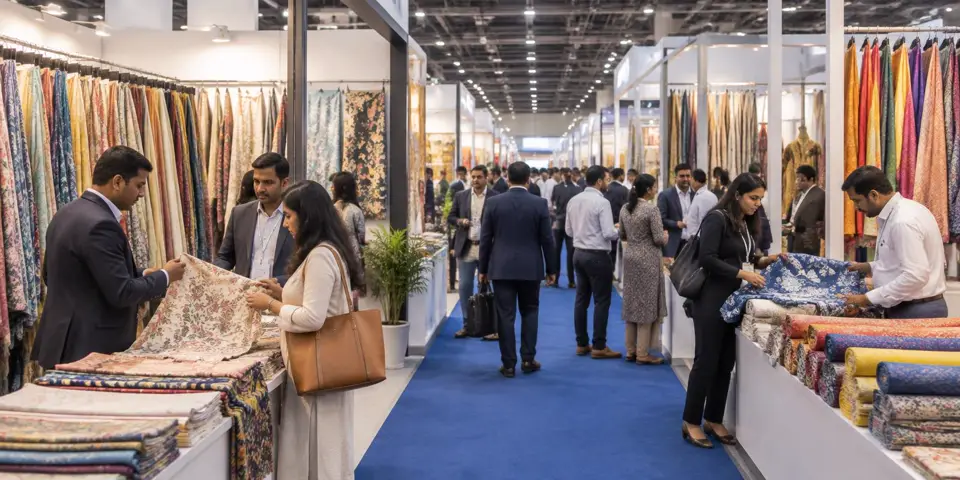
Editorial note: This is source-based explanatory analysis, not firsthand reporting or a supplier audit. The cover is an AI-generated editorial illustration, not a photograph of a named company, designer or event.
Style Serum Editorial Desk
Source-based industry explainers
Explanatory analysis prepared from the official sources cited in each article. No original interviews or supplier audits are implied.

Reviewed by
Vasundhara ChopraContributing Editor, Fashion Business & India
NIFT-certified stylist with an MA in Luxury Brand Management from Regent's University London, covering fashion business, retail and Indian fashion.