
Khadi vs Handloom: What Changes Between Yarn and Cloth
Understand handspinning, handweaving and KVIC verification before paying for a khadi claim.
By Vasundhara Chopra ·
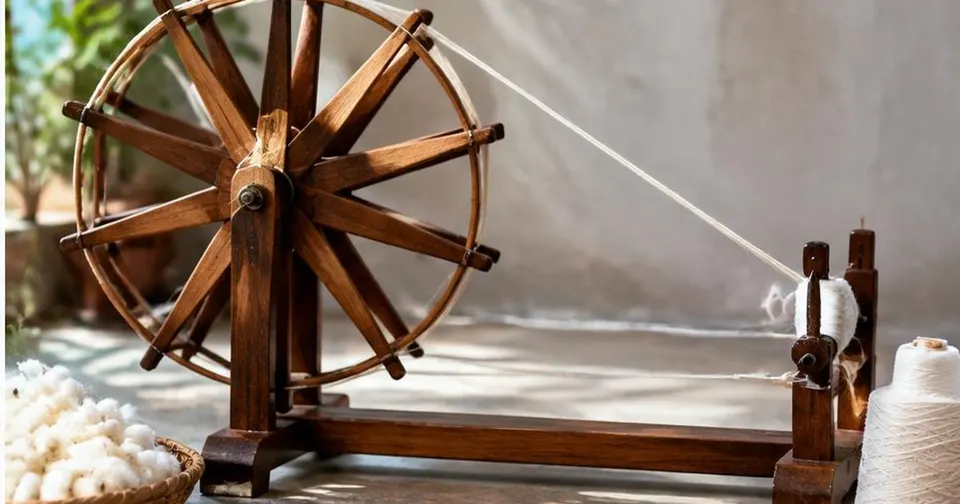
Two production stages explain the difference
The simplest useful distinction between khadi and handloom begins before weaving. Spinning turns fibre into yarn; weaving interlaces yarn into cloth. A handloom describes the weaving stage. Khadi requires attention to both: its defining production identity is handspun yarn woven by hand, within the applicable khadi framework.
This is why the terms are related but not interchangeable. Handwoven cloth made with mill-spun yarn can be handloom without being khadi. A rough texture, muted colour or association with a rural shop does not resolve the distinction. Buyers need a production claim and a verification route, not a visual stereotype.
Khadi is not another word for cotton
KVIC’s Khadi Design Competition background describes khadi as handspun and handwoven and notes that silk and wool yarns are also used. Its identity therefore cannot be reduced to white cotton cloth. Cotton, silk, wool and relevant combinations need to be described accurately rather than hidden behind the single word “khadi.”
When comparing garments, separate fibre from construction. Ask for the fibre composition and whether both spinning and weaving support the khadi description. Also distinguish the fabric from the finished garment: stitching, lining, printing, embroidery and trims are separate production stages. A khadi outer fabric does not make every component handspun or handwoven.
This distinction also helps avoid misleading comparisons. A lightweight cotton handloom shirt and a heavier wool khadi jacket serve different purposes. Their prices cannot be assessed fairly through the shared word “handmade.” Compare equivalent material, weight, construction, finishing and service before deciding whether a premium is justified.
Understand KVIC’s role and the Khadi Mark
The KVIC Directorate of Khadi Certification lists responsibilities including khadi certification, Khadi Mark registration, checking genuineness and suspending or cancelling certificates. Its explanation of the Khadi Mark Regulations states that textiles must not be sold or traded as khadi or khadi products without the prescribed Khadi Mark tag or label.
That makes the khadi claim different from casually describing something as craft-inspired. Ask the seller about the relevant certification and label rather than accepting the word as an aesthetic category. The KVIC Act, rules and regulations page is a starting point for the governing framework; use current official guidance for an actual registration or compliance decision.
Certification at institution level and identification of the purchased product are connected but distinct. A certificate shown on a wall does not explain which rolls or garments it covers. Ask how the labelled article was sourced and how the invoice identifies it. For uncertain cases, contact the official certification channel instead of relying solely on a reseller’s assurance.
Handloom evidence answers a narrower question
The Handloom Mark scheme focuses on authenticity of loom origin. That is useful evidence for handweaving, but it does not replace the evidence needed for a khadi claim. A seller who offers only Handloom Mark when asked about khadi has not yet answered the question about handspinning and the khadi framework.
Likewise, the absence of one mark should not prompt an improvised conclusion about another scheme. Inspect the claim actually made and the applicable verification process. If an online description alternates between “khadi,” “handloom” and “khadi look,” ask the seller to state which is intended in writing. Fabric resembling khadi is not the same as fabric represented as genuine khadi.
A buying checklist that works online or in store
Start with the listing or hangtag. Record the seller’s name, manufacturer or supplying institution, fibre composition, production description and care guidance. Ask for readable photographs of relevant labels and certification details. Keep the product page and order confirmation, especially where the seller makes a specific spinning or weaving promise.
Next, inspect the cloth for suitability rather than trying to authenticate it by touch. Check transparency, comfort, seam quality, shrinkage information and colour-transfer warnings. For expensive fabric bought by the metre, consider a sample and agree on acceptable variation before placing a larger order. Do not damage a shop sample with a burn test; such tests are unsafe and cannot establish the complete production history anyway.
Finally, obtain the return policy and a clear invoice. If a claim cannot be substantiated, choose a description supported by the evidence or do not purchase. A retailer willing to explain its sourcing and correct an inaccurate listing is more useful than one that offers only romantic language about tradition.
Avoid automatic environmental conclusions
Handspinning and handweaving describe production methods, not a complete life-cycle assessment. Cultivation, animal husbandry where relevant, dyeing, finishing, transport, washing and garment longevity still matter. Neither “natural” nor “khadi” alone establishes low water use, absence of hazardous processing, fair wages or zero emissions.
Ask narrowly framed questions instead: what is the fibre; which processing steps are documented; what care will preserve the garment; and what evidence supports any additional environmental claim? The best khadi purchase combines an accurate production identity with appropriate performance and credible records. Appreciation for its cultural significance does not require treating the label as proof of every desirable attribute.
Continue the analysis
This discussion connects with Scaling Indian Craft Without Erasing Its Makers and India Apparel Export Compliance: From IEC to Shipment Files. Explore the full India Fashion section for related coverage.
Editorial note: This is source-based explanatory analysis, not firsthand reporting or a supplier audit. The cover is an AI-generated editorial illustration, not a photograph of a named company, designer or event.

Written by
Vasundhara ChopraContributing Editor, Fashion Business & India
NIFT-certified stylist with an MA in Luxury Brand Management from Regent's University London, covering fashion business, retail and Indian fashion.
More in India Fashion
Surat textile businessman gives ₹1 lakh Diwali bonuses to 20 employees
Style Serum News Desk ·
India Fashion Trade Shows 2027: Textile and Sourcing Fair Dates
Style Serum Editorial Desk ·
Handloom Mark, India Handloom Brand and GI: Three Different Authenticity Questions
Style Serum Editorial Desk ·