
Understanding India’s Silk Supply Chain Beyond the Sari Label
Follow silk from host plant and cocoon to yarn, fabric and finishing—and ask better questions about purity and provenance.
By Style Serum Editorial Desk · · Edited by Vasundhara Chopra
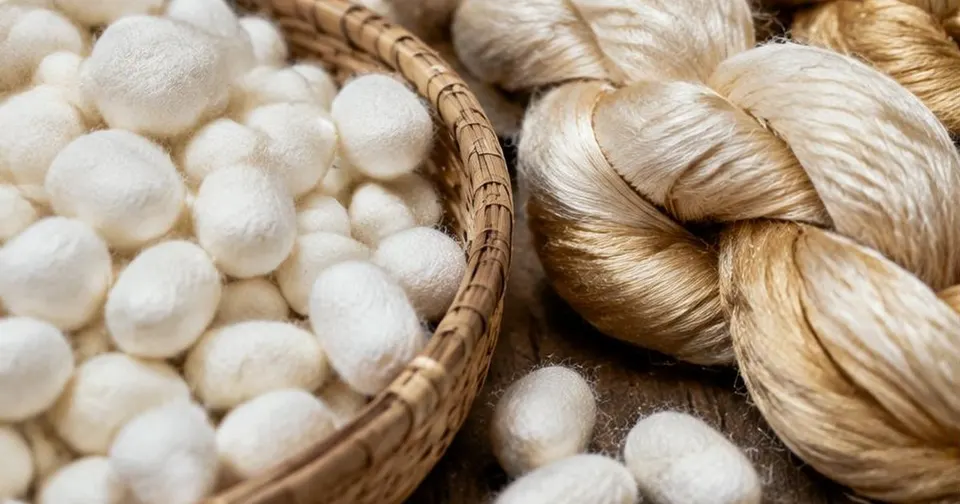
Silk is a material and a production chain
A silk label can conceal several distinct questions. Which silkworm produced the fibre? Where were the cocoons raised? Was the yarn reeled or spun? Where was it woven and finished? Is the fabric entirely silk, a blend, or a construction with different fibres in warp and weft? None of those answers follows automatically from the name of the finished garment.
The Central Silk Board is a statutory body under India’s Ministry of Textiles concerned with development of the sericulture and silk industry. Its annual-report page provides institutional context and reports for further research. Use dated reports carefully: production statistics belong to particular reporting periods, not to an undifferentiated claim about the industry today.
Distinguish the principal silk groups
CSB’s Vanya silk overview identifies mulberry, tasar, muga and eri as India’s principal natural silk varieties, with tasar, eri and muga grouped as non-mulberry or Vanya silks. These are not merely colour names or finishing styles. They point to different biological and production contexts.
Mulberry silk is associated with silkworms fed on mulberry leaves. Tasar includes silk from silkworms reared on particular host trees; muga is associated with its characteristic golden appearance; eri is commonly encountered as spun silk. Avoid turning these broad identities into absolute rules about every garment. Dyeing, blending, yarn preparation and finishing can substantially change appearance and handle.
Nor should “wild silk” be interpreted as proof that no human management or environmental pressure exists. Host plants, rearing practices, harvesting and processing still need examination. If a supplier describes a textile as eri or muga, ask how that identity is documented and whether the claim applies to the entire cloth or only one yarn component.
Follow the material through its transformations
CSB’s general explanation of silk describes silk as protein secreted by silkworms, which spin cocoons during their life cycle. Commercial production begins upstream of the loom: healthy planting material or host plants, silkworm seed, rearing conditions and cocoon handling all influence the material available to processors.
The chain then branches. Reeling unwinds suitable cocoon filaments into yarn; spinning uses silk fibres that are not being maintained as one continuous reeled filament. CSB’s Vanya overview also distinguishes reeled silk, spun yarn and noil yarn. A textured spun-silk fabric is not automatically an inferior imitation of smooth filament silk: it is a different construction whose suitability depends on the intended use.
Subsequent operations can include twisting, degumming, dyeing, weaving and finishing, with the sequence varying by product. Degumming removes some or much of the sericin surrounding the fibroin fibre and changes handle and weight. Therefore, “raw silk” needs clarification in a commercial specification: sellers may use the phrase differently, and texture alone cannot establish the processing history.
Separate fibre purity from geographical identity
Pure silk describes fibre content, not necessarily an entirely Indian upstream supply chain. Yarn can cross borders, and fabric may be woven or finished somewhere different from where cocoons were produced. Ask separately about cocoon origin, yarn origin, weaving location and finishing location if those distinctions matter to the purchase.
A protected geographical name is another separate issue. IP India’s GI introduction explains that geographical indications connect goods with a territory through quality, reputation or other characteristics. For a named regional silk textile, examine the particular registered specification instead of assuming the GI proves the origin of every raw material.
Ask for the fibre composition in writing, including warp, weft, borders, lining and decorative components where relevant. A sari may include metallic-looking yarn or other non-silk elements that need an accurate description. Where a seller presents a purity label, ask how to verify it through the issuing organisation. Purity evidence should not be stretched into proof of handweaving, geographical origin or animal-welfare practice.
Treat welfare and environmental claims as additional enquiries
Conventional silk production often involves preventing moth emergence to preserve reelable filaments. Claims such as “ahimsa,” “peace silk” or “non-violent silk” therefore need process-specific evidence. Ask what happened to the insects, how cocoons were collected, how the yarn was processed and how lots were kept identifiable. A silk variety’s name alone is not a complete welfare audit.
Likewise, natural protein fibre does not automatically mean low-impact production. Host-plant management, energy for processing, degumming chemistry, dyes, effluent treatment and transport all matter. A Vanya description does not establish certified organic production, zero chemical use or verified biodiversity benefits. Prefer narrow, documented statements to broad declarations that all silk is sustainable.
Buy against a usable specification
For a consumer purchase, retain the invoice, fibre declaration, origin claims, label details and care instructions. Ask about colourfastness, shrinkage and appropriate cleaning. Avoid destructive home tests: they cannot reconstruct the supply chain, may damage the item and can be unsafe.
For professional sourcing, approve samples and specify yarn type, composition, weight, width, finish, shade tolerances and required performance tests. Request records connecting deliveries to the relevant yarn and processing lots, and identify subcontracted stages. Good silk sourcing does not depend on a single romantic origin story. It connects the finished fabric to verifiable material and production claims while acknowledging where the evidence stops.
Continue the analysis
This discussion connects with Handloom Mark, India Handloom Brand and GI: Three Different Authenticity Questions and Khadi vs Handloom: What Changes Between Yarn and Cloth. Explore the full India Fashion section for related coverage.
Editorial note: This is source-based explanatory analysis, not firsthand reporting or a supplier audit. The cover is an AI-generated editorial illustration, not a photograph of a named company, designer or event.
Style Serum Editorial Desk
Source-based industry explainers
Explanatory analysis prepared from the official sources cited in each article. No original interviews or supplier audits are implied.

Reviewed by
Vasundhara ChopraContributing Editor, Fashion Business & India
NIFT-certified stylist with an MA in Luxury Brand Management from Regent's University London, covering fashion business, retail and Indian fashion.
More in India Fashion
Surat textile businessman gives ₹1 lakh Diwali bonuses to 20 employees
Style Serum News Desk ·
India Fashion Trade Shows 2027: Textile and Sourcing Fair Dates
Style Serum Editorial Desk ·
Handloom Mark, India Handloom Brand and GI: Three Different Authenticity Questions
Style Serum Editorial Desk ·