GOTS and GRS explained: read the standard, version and claim
Organic and recycled certifications answer different questions. Knowing the thresholds and transition dates prevents a credible certificate becoming an exaggerated claim.
By Style Serum Editorial Desk · · Edited by Vasundhara Chopra

Two standards, two starting questions
GOTS, the Global Organic Textile Standard, concerns textiles made with certified organic natural fibres and includes processing-related environmental and social requirements. GRS, the Global Recycled Standard, concerns recycled material, chain of custody and additional processing requirements. Neither is a general score declaring one garment universally “sustainable.”
A useful first question is what the buyer needs to establish. Is it the organic status of cotton, the recycled origin of polyester, specified processing controls, or evidence connecting an order to certified material? Different questions require different records. A logo alone cannot supply all of them.
GOTS version 8.0 is the latest released version
The official GOTS version 8.0 standard was released on 2 March 2026. It becomes effective for all certified entities and approved chemical inputs on 1 March 2027, and audits and assessments from that date must use version 8.0. Early adoption is permitted during the transition.
It is therefore inaccurate to present GOTS 7.0 as the latest released standard. It is equally misleading to assume that every valid certificate must have switched to version 8.0 immediately upon publication. A certificate must be assessed against its audit date, scope and the applicable transition requirements. Buyers should record the version rather than silently treating all GOTS documentation as interchangeable.
Under version 8.0, the “Organic” label grade requires at least 95% certified organic fibre content, with accessories excluded from the fibre-content calculation. The “Made with (x%) organic materials” grade requires at least 70%. The standard also provides corresponding in-conversion label grades, which should not be casually described as identical to fully organic material. Those thresholds do not remove the other rules governing permitted remaining fibres, processing and labelling.
The standard’s label information includes the grade, approved certification body reference and certified entity’s certification number. A purchasing team should verify the actual approved claim rather than invent a shortened version that changes its meaning. A “made with” grade is not permission to describe the whole product as entirely organic.
What GOTS does not establish
GOTS goes beyond verifying an organic raw-material input: it addresses requirements through textile processing and the certified supply chain. Nevertheless, it does not mean a garment has zero environmental impact, that no chemicals were used, or that every worker-related risk has disappeared.
Organic fibre content is also not a durability guarantee or a recycling guarantee. An organic cotton shirt can still be poorly constructed or difficult to repair. Procurement should therefore combine certification evidence with performance requirements and supplier due diligence, rather than treating the label as a substitute for either.
GRS thresholds need version labels
For GRS 4.0, Textile Exchange’s official revision summary distinguishes a minimum 20% recycled-material threshold for products within certification scope from the 50% threshold for product labelling. These are different thresholds for different purposes, not competing definitions of the same claim. Being eligible for certification at a lower percentage does not automatically authorise a consumer-facing GRS label.
Version management matters here too. The published GRS 5.0 document states that it is effective from 1 July 2026, with mandatory implementation on 31 December 2026; audits from the mandatory date must use that version. The familiar 20%/50% explanation should therefore be explicitly identified as the GRS 4.0 framework, not presented as a timeless rule covering every future standard and claims policy.
Textile Exchange is also introducing Materials Matter. Its transition information and RCS/GRS overview describe the move towards the new system, including an effective date of 31 December 2026 and mandatory transition from 31 December 2027 for the relevant Tier 4 audits. This is not a single date on which every downstream certificate or label automatically becomes invalid. Confirm the rules for the organisation, material, audit and claim involved.
Check scope before trusting the paperwork
A scope certificate identifies an organisation’s certified activities and product scope. It does not, on its own, establish that every item sold by that organisation is certified. Transaction-level documentation connects certified material to particular commercial movements under the relevant scheme’s requirements.
For an illustrative order of recycled-polyester lining, request the product specification, applicable certified scope, material percentage and required transaction evidence. Check that names, sites, product categories and dates are consistent. If an agent sends a certificate for an unrelated mill, the paperwork gap remains even if that mill is genuinely certified.
The same discipline applies to organic garments. Buying fabric from a certified supplier does not automatically authorise a brand to label every finished garment GOTS-certified. Processing, subcontracting, trading and claim approval must follow the applicable scheme rules.
Make narrower claims that readers can understand
A defensible statement identifies the certified product or component, the material attribute and the relevant verification. “Certified recycled content in the lining” is more informative than implying that a recycled lining certifies the whole jacket’s environmental performance. Keep the approved wording and certificate details available to customers or procurement teams.
Finally, maintain a standards register with version, effective date, audit date, certificate scope and claim approval. Review it when contracts renew and when standards change. Certification is most valuable as structured evidence supporting a defined claim—not as permission to stop asking questions about longevity, chemistry, working conditions or the scale of production.
Continue the analysis
This discussion connects with Circular textile procurement starts with the contract and EU fashion rules: what textile EPR and ESPR actually require. Explore the full Sustainable Fashion section for related coverage.
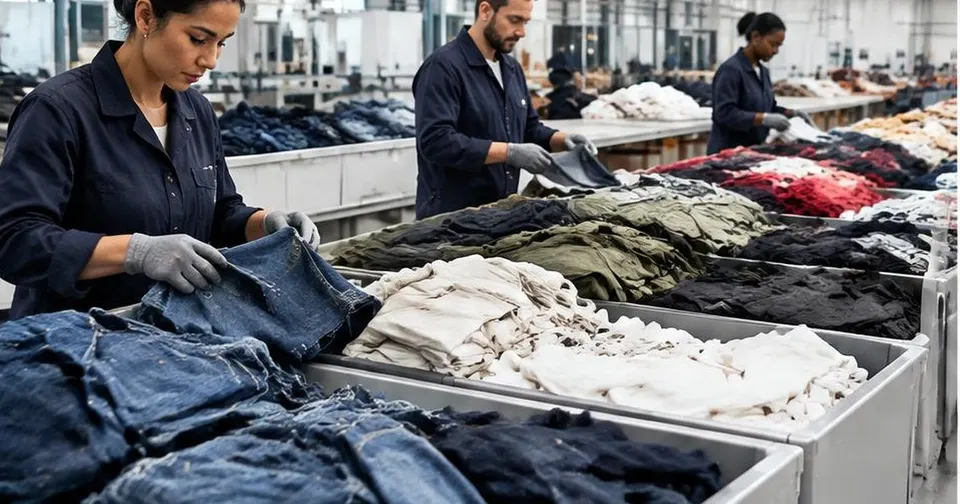
Editorial note: This is source-based explanatory analysis, not firsthand reporting or a supplier audit. The cover is an AI-generated editorial illustration, not a photograph of a named company, designer or event.
Style Serum Editorial Desk
Source-based industry explainers
Explanatory analysis prepared from the official sources cited in each article. No original interviews or supplier audits are implied.

Reviewed by
Vasundhara ChopraContributing Editor, Fashion Business & India
NIFT-certified stylist with an MA in Luxury Brand Management from Regent's University London, covering fashion business, retail and Indian fashion.