Circular textile procurement starts with the contract
Buy useful service, require evidence and track actual destinations: a practical approach to uniforms, linen and other professional textiles.
By Style Serum Editorial Desk · · Edited by Vasundhara Chopra

Define the need before specifying the fibre
Circular textile procurement begins by asking what service is required. A hospital needs hygienic, reliable linen; a maintenance team needs suitable workwear; a hotel needs bedding that performs through repeated laundering. Buying a product labelled “circular” does not establish that these needs are met with fewer resources.
UNEP’s global textile roadmap connects changes in consumption with improved practices and infrastructure investment. For institutional buyers, that means reviewing existing stock, repair options, laundry practices and collection systems before selecting a material. The objective is useful service over time, not simply a new product with a more attractive environmental description.
This article uses illustrative procurement examples, not reported performance claims. The right specification depends on safety, hygiene, user needs, available suppliers and the legal framework governing the buyer.
Translate circularity into verifiable requirements
Start with performance: dimensional stability, colourfastness, seam strength and suitability for the intended cleaning process. Then specify service features such as replaceable components, access to repairs, stock replenishment and compatibility across batches. A fibre preference should not override a mandatory protective or hygiene requirement.
The European Commission JRC’s textile procurement technical report offers a structured reference covering textile products and services. It dates from 2017 and should be treated as technical guidance rather than a newly imposed, universally mandatory tender template. Public buyers must also follow applicable procurement law, including the rules governing evidence and equivalent solutions.
A useful tender distinguishes minimum requirements, scored improvements and contract-performance conditions. For example, a minimum laundering test establishes fitness for use; an evaluated repair service may improve the offer; quarterly destination records then become a contract-management requirement. Combining everything into one vague demand for “sustainable textiles” makes evaluation and enforcement difficult.
Compare the cost of service, not just purchase price
An inexpensive garment can be costly if it shrinks, fails frequently or becomes incompatible with the next uniform batch. Compare acquisition, laundering, inspection, repair, replacement, logistics and end-of-use management over a defined service period. Use assumptions that bidders can understand and evaluators can test.
Consider an illustrative municipality choosing between purchasing workwear and a managed service. The service may improve repair access and stock utilisation, but only if inventory levels and replacement incentives are well designed. A contract that rewards frequent replacement could undermine the promised circular outcome.
Require bidders to explain their assumptions about garment life and loss rates. Test sensitive variables rather than assuming one exact lifetime will occur. Separate financial comparisons from environmental assessments: a lower operating cost is not itself proof of lower emissions or reduced water impacts.
Build traceability around decisions
Traceability should connect product identity, supplier, composition, relevant finishes, batch, certification evidence and service history. The appropriate detail depends on the decision. A laundry may need individual identifiers to manage stock; a buyer checking fibre claims may need batch-linked material records. Neither necessarily requires exposing personal information about the wearer.
Define who records each event and who corrects errors. A QR code is an access point, not verification. A database containing unsupported supplier declarations remains a database of unsupported declarations. Preserve distinctions between verified records, supplier statements, estimates and missing information.
The Commission’s textile digital product passport guidance says textile-specific passport requirements will be defined in the future delegated act alongside textile ecodesign requirements. Buyers can prepare interoperable, exportable records now without claiming that every textile already faces a final, uniform EU passport specification.
Verify recycled and organic claims at order level
When using certifications, check the standard, version, certified activities, applicable product scope and transaction evidence. The Textile Exchange RCS and GRS overview explains the role of recycled-material and chain-of-custody verification. A supplier’s certificate should not be treated as proof that all its products contain certified recycled material.
For an illustrative uniform contract, the buyer might request an evidence pack for each approved fabric and a change-control process whenever a mill or composition changes. This makes substitutions visible. Otherwise, a certified tender sample can become disconnected from the garments eventually delivered.
Allow proportionate evidence routes where required by procurement rules. Demanding unnecessary duplicate systems can exclude capable smaller suppliers without improving confidence. The aim is reliable verification of the requirement, not the largest possible pile of documents.
Contract for destinations, not merely collection
A take-back clause should specify sorting responsibilities, permitted treatment routes, reporting evidence and handling of unusable material. “Collected for recycling” is not equivalent to “recycled into new textiles.” Distinguish direct reuse, preparation for reuse, fibre recycling, other material recycling, energy recovery and disposal.
The 2025 Waste Framework Directive amendment strengthens the EU textile EPR and waste-management framework. A procurement take-back agreement does not replace applicable producer obligations or change waste status by itself. Check authorised operators and relevant shipment requirements when material crosses borders.
Ask for destination records and reconcile outgoing quantities with contractor reports. Report limitations honestly: if an operator can verify receipt but not final output, do not convert that evidence into a confirmed recycling rate.
Review outcomes and change the next tender
Track garment availability, repairs, premature failures, losses, replacement frequency and verified destinations. Define denominators and reporting periods so results remain comparable. Keep environmental claims separate from operational indicators unless a suitable assessment connects them.
The most valuable review asks what changed: did repairs reduce avoidable replacement, did a better fit improve use, or did a problematic finish prevent recycling? Feed those findings into the next specification. Circular procurement becomes credible when the contract, evidence system and daily service reinforce one another—not when circularity appears only in the tender’s introduction.
Continue the analysis
This discussion connects with EU fashion rules: what textile EPR and ESPR actually require and Making fashion repair work as a business. Explore the full Sustainable Fashion section for related coverage.
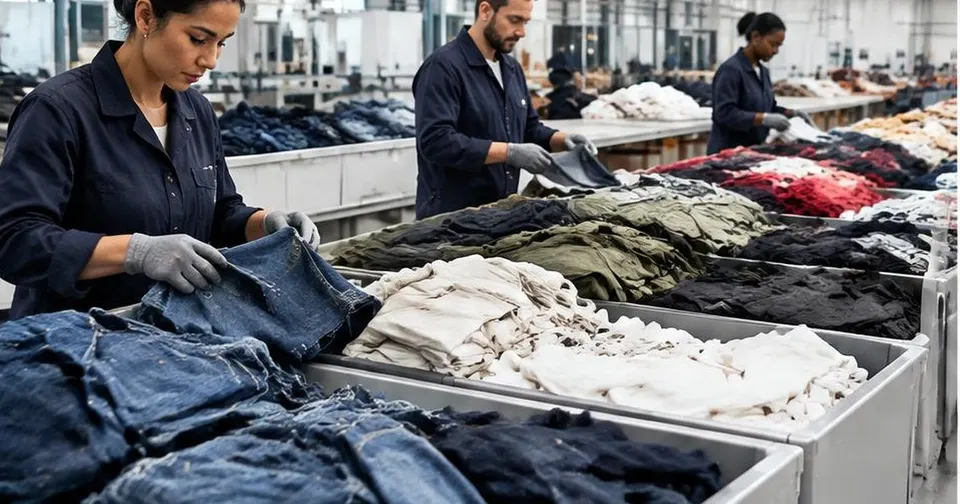
Editorial note: This is source-based explanatory analysis, not firsthand reporting or a supplier audit. The cover is an AI-generated editorial illustration, not a photograph of a named company, designer or event.
Style Serum Editorial Desk
Source-based industry explainers
Explanatory analysis prepared from the official sources cited in each article. No original interviews or supplier audits are implied.

Reviewed by
Vasundhara ChopraContributing Editor, Fashion Business & India
NIFT-certified stylist with an MA in Luxury Brand Management from Regent's University London, covering fashion business, retail and Indian fashion.