EU fashion rules: what textile EPR and ESPR actually require
Separate enacted waste obligations from forthcoming product rules, then build a compliance plan around the distinction.
By Style Serum Editorial Desk · · Edited by Vasundhara Chopra
Two laws, different jobs
European textile policy is moving on two connected tracks. Extended producer responsibility, or EPR, addresses who finances and organises waste management. The Ecodesign for Sustainable Products Regulation, or ESPR, creates a framework for requirements concerning products placed on the market. A collection scheme is not evidence that a garment meets future ecodesign requirements; a durable garment does not automatically exempt its producer from EPR.
The distinction matters commercially. Brands need reliable product and sales records for waste compliance, while designers need material, construction and performance evidence for product rules. Treating everything as one future “circular fashion law” obscures which obligations already exist and which details still await legislation.
Textile EPR is enacted, with implementation deadlines
The enacted Waste Framework Directive amendment, Directive (EU) 2025/1892, establishes common rules requiring Member States to introduce EPR for covered textile, textile-related and footwear products. It is no longer simply a Commission proposal. The Commission’s entry-into-force announcement confirms that it entered into force on 16 October 2025.
Member States must transpose the amendment by 17 June 2027 and establish the required textile EPR schemes by 17 April 2028. These are distinct milestones: entry into force at EU level does not mean every national registration portal, fee schedule and operating procedure became identical immediately. Existing national schemes may already impose obligations before the common deadline. The directive also provides additional time for qualifying microenterprises; businesses should verify eligibility rather than assuming that every small seller is exempt.
Producers will finance specified waste-management activities through national arrangements. These include collection, sorting, preparation for reuse and recycling, alongside other prescribed costs. Product scope and the legal definition of producer matter: an importer, distance seller or business selling under its own name may have responsibilities even without owning a factory.
Separate collection is not the same deadline
The requirement for Member States to establish separate textile collection from 1 January 2025 predates the new EPR implementation timetable. It should not be confused with the date by which the revised directive requires producer-financed schemes. Collection also does not establish that all collected garments are reused or recycled.
The amendment strengthens the framework around sorting and the distinction between used products and waste. A brand promising a take-back service should therefore ask what happens after collection: who assesses reusability, which outputs remain waste, and which operators receive material? Calling an unsorted shipment “second-hand clothing” is not a substitute for complying with waste and shipment rules.
ESPR exists; textile specifications are still forthcoming
ESPR is an enacted EU regulation, not merely an aspiration. However, it is a framework under which product-specific measures are developed. The Commission’s textile digital product passport guidance explicitly states that textile-specific passport requirements will be defined through the future delegated act introducing textile ecodesign requirements.
The 2025–2030 working plan prioritises textiles, particularly apparel, and gives an indicative 2027 adoption timetable for the textile measure. That is not a universal 2027 compliance deadline for every garment. Adoption, entry into force and application are different events; the final measure will determine scope, data requirements and applicable transition periods.
Consequently, a brand should not advertise a homemade QR-code page as proof of compliance with a final EU textile passport specification that has not yet been set. Equally, uncertainty about the final fields is no reason to postpone basic supply-chain record keeping. Preparation and a legal compliance claim are different things.
Design a practical readiness programme
Consider an illustrative mid-sized company selling shirts through its own website and independent retailers in several Member States. Its first task is a market-by-market map: which legal entity places each product on each market, which national schemes already operate, and which product categories are covered? A central spreadsheet can start the process, provided ownership and update responsibilities are clear.
The second task is product evidence. Record fibre composition, component suppliers, relevant finishes, construction details, repair instructions and available performance tests. Connect records to actual styles and batches rather than maintaining an attractive but disconnected supplier directory. Preserve uncertainty: an unverified recycled-content statement should not silently become a confirmed passport field.
Third, assign separate owners for legal monitoring, producer registration, product development and claims approval. Finance needs a way to model EPR costs, but the final fee implications depend on national implementation and eco-modulation arrangements. Design teams should avoid claiming that a particular fibre automatically guarantees a lower fee everywhere.
Use regulation to improve decisions, not just labels
EPR can make downstream costs more visible, while ecodesign can influence upstream choices. Neither mechanism alone proves that a collection has lower overall environmental impacts. Durability, chemical management, production volumes, repair access and actual treatment infrastructure still matter.
A useful quarterly review asks three questions: what legal requirements changed, which evidence improved, and which product decision changed as a result? Replacing a hard-to-repair component may be worthwhile now, without promising compliance with unpublished textile rules. The strongest readiness strategy combines dated legal tracking with operational improvements that remain useful even if a delegated act’s timetable changes.
Continue the analysis
This discussion connects with Making fashion repair work as a business and Recycled fibres: useful tools with real limits. Explore the full Sustainable Fashion section for related coverage.
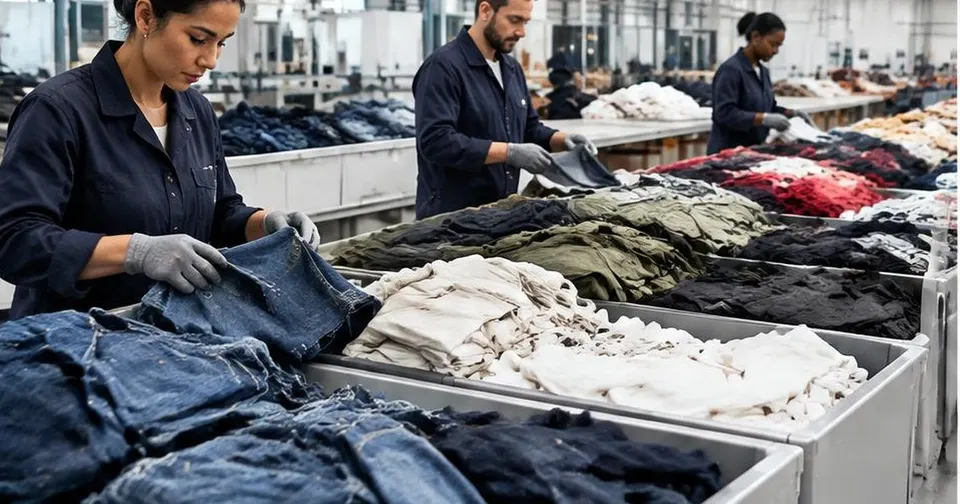
Editorial note: This is source-based explanatory analysis, not firsthand reporting or a supplier audit. The cover is an AI-generated editorial illustration, not a photograph of a named company, designer or event.
Style Serum Editorial Desk
Source-based industry explainers
Explanatory analysis prepared from the official sources cited in each article. No original interviews or supplier audits are implied.

Reviewed by
Vasundhara ChopraContributing Editor, Fashion Business & India
NIFT-certified stylist with an MA in Luxury Brand Management from Regent's University London, covering fashion business, retail and Indian fashion.