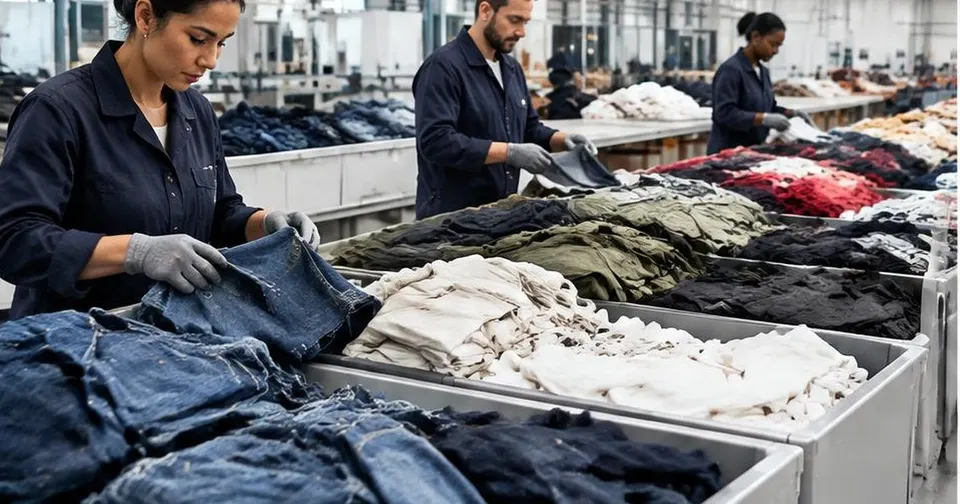
Recycled fibres: useful tools with real limits
Recycled content can reduce demand for virgin inputs, but feedstock, processing, durability and the next end of life determine what it achieves.
By Style Serum Editorial Desk · · Edited by Vasundhara Chopra
Ask what is being recycled into what
“Recycled” describes a material’s origin, not a complete environmental assessment. Recycled cotton, polyester and wool involve different inputs and processing routes. A claim becomes more meaningful when it identifies the fibre, recycled proportion, source category and evidence supporting the chain of custody.
The Textile Exchange Materials Market Report 2025, which reports 2024 production data, notes that recycled polyester was still primarily produced from plastic bottles. That is a dated market finding, not proof that any particular garment contains bottle-derived polyester. It also illustrates why recycled material in clothing should not automatically be described as textile-to-textile recycling.
The central questions are practical: does the process replace a virgin input, preserve useful material quality and create a product suitable for its intended use? The answer may differ between two fabrics carrying the same recycled-content percentage.
Understand the possible benefits
Recycling can recover value from material that would otherwise be discarded and reduce demand for some virgin resources. Depending on the route, it may avoid parts of extraction, cultivation or polymer production. Sorting by colour may sometimes reduce subsequent dyeing needs. These are mechanisms to investigate, not universal savings guaranteed by the word “recycled.”
A comparison should account for collection, sorting, transport, cleaning, processing losses, energy and finishing. It should also specify the reference product and geographic conditions. Replacing virgin fibre in one factory with recycled fibre processed elsewhere does not automatically produce the same result as a published study of another supply chain.
UNEP’s textile roadmap treats material changes as one part of a broader transformation involving consumption, production practices and infrastructure. Recycling should complement longer use and waste prevention, not become a reason to ignore them.
Mechanical recycling has material constraints
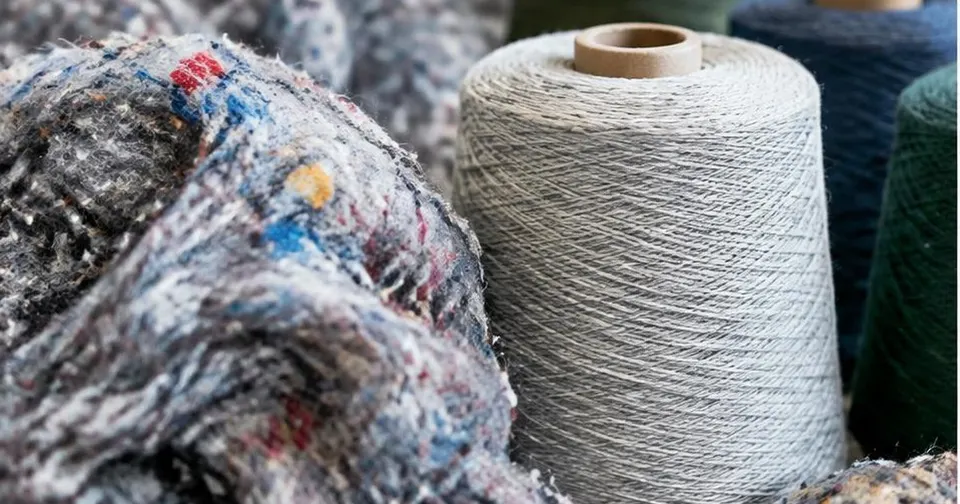
Mechanical textile recycling commonly opens or shreds material back towards fibres. For cotton, this can shorten fibres and affect yarn strength or spinning performance. Manufacturers may blend recycled cotton with longer virgin fibres or other materials to meet a particular specification. The best blend depends on the product and processing technology, not a universal maximum recycled percentage.
Consider an illustrative pair of jeans. Increasing mechanically recycled cotton may be useful if the resulting fabric still meets wear, tear and laundering requirements. If the fabric fails prematurely and is replaced sooner, the higher recycled percentage alone is a poor measure of success. A modest verified recycled share in a durable design may be more useful than an ambitious percentage in an unsuitable construction.
Colour, trims, elastane and coatings also influence sorting and recovery. A fabric can contain recycled fibre yet remain difficult to recycle again. Input circularity and future recyclability are separate design questions that need separate evidence.
Chemical routes are not a universal escape hatch
Chemical and dissolution-based processes cover different technologies. Some recover polymers; others break materials into chemical building blocks or regenerate cellulose. Their feedstock requirements, output quality, chemical management and energy needs vary. A laboratory demonstration does not establish that every blend can be processed economically at commercial scale.
A buyer should ask which contaminants are tolerated, what fraction of incoming material becomes usable output, how solvents or other chemicals are managed, and where the facility operates. Commercial agreements should distinguish operating capacity from announced capacity and a successful trial from repeatable production.
The market context in Textile Exchange’s report reinforces the need for caution: textile-to-textile recycling remains constrained. Do not promise a functioning closed loop simply because a technology provider has accepted a sample swatch.
Bottle-derived polyester raises different questions
Turning recovered bottles into polyester fibre can displace virgin polyester inputs. However, it does not solve the collection and processing problems of discarded clothing. Assessments should also consider alternative uses of that bottle feedstock rather than assuming that any movement into apparel is the best possible outcome.
Polyester remains a synthetic polymer when recycled. Recycled origin alone does not make it biodegradable or eliminate fibre shedding during manufacture, use or washing. Claims about lower shedding require product-specific evidence, including fabric construction and finishing, rather than an inference from recycled content.
An illustrative fleece buyer should therefore examine both verified feedstock and fabric performance. The questions include durability, laundering behaviour and access to an actual next-use route. “Made from recycled bottles” answers only one part of that investigation.
Verify content without overstating impact
The Textile Exchange explanation of RCS and GRS describes third-party recycled-material and chain-of-custody certification; GRS also includes additional processing-related requirements. Such certification can support a specific material claim. It is not a comparative life-cycle assessment and does not certify that every possible impact is lower.
Ask for evidence tied to the purchased product and transaction, not just a supplier’s general certificate. Clarify whether a percentage refers to the whole product, a named component or its fibre content. State pre-consumer or post-consumer origin when verified, and do not equate either category with inherently negligible impact.
The most defensible sourcing decision combines verified origin, fit-for-purpose quality, transparent process information and a realistic end-of-life route. Where evidence is incomplete, say so. Recycled fibres are valuable tools, but their benefits are strongest when embedded in products that last and systems that need less new material overall.
Continue the analysis
This discussion connects with GOTS and GRS explained: read the standard, version and claim and Circular textile procurement starts with the contract. Explore the full Sustainable Fashion section for related coverage.
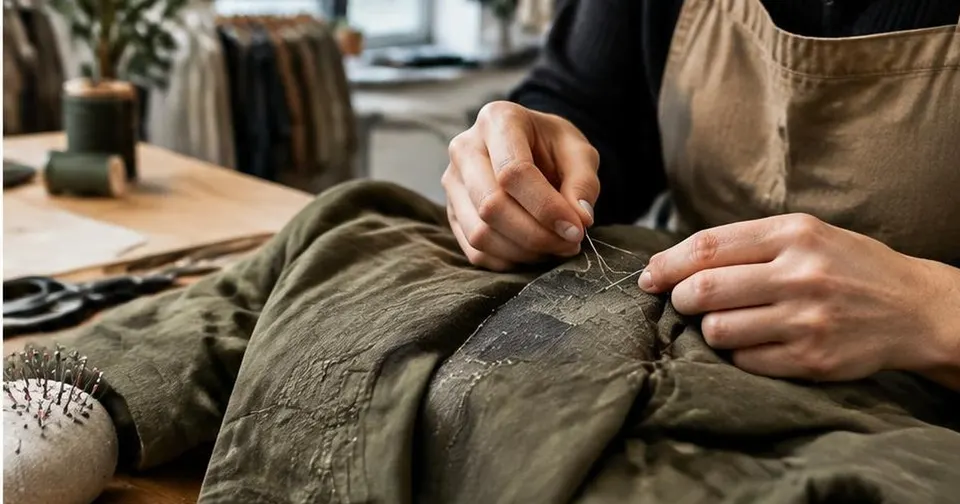
Editorial note: This is source-based explanatory analysis, not firsthand reporting or a supplier audit. The cover is an AI-generated editorial illustration, not a photograph of a named company, designer or event.
Style Serum Editorial Desk
Source-based industry explainers
Explanatory analysis prepared from the official sources cited in each article. No original interviews or supplier audits are implied.

Reviewed by
Vasundhara ChopraContributing Editor, Fashion Business & India
NIFT-certified stylist with an MA in Luxury Brand Management from Regent's University London, covering fashion business, retail and Indian fashion.