Resale's Next Phase: Discovery, New Shoppers and Brand-Run Trade-Ins
ThredUp's 2026 report projects a $393 billion global secondhand apparel market by 2030. The bigger story is who will drive that growth and how they will find what they buy.
By Vasundhara Chopra ·
The headline numbers
Secondhand clothing keeps growing faster than fashion overall. The 2026 Resale Report from ThredUp, with research conducted by GlobalData, projects that the global secondhand apparel market will reach $393 billion by 2030, according to Retail Dive's coverage of the report on 3 April 2026.
For the United States, the research projects a secondhand apparel market of $78.8 billion by 2030, with average annual growth of about 7.3%. Retail Dive also reports that the US secondhand market grew nearly four times faster than the broader retail clothing market in 2025.
Two caveats. ThredUp runs a resale business, so it has a commercial interest in the market's growth. And the 2030 figures are projections, not results.
Who will drive the growth
The report expects Gen Z and millennials together to generate more than 70% of resale market growth through 2030. It also expects new shoppers — people who have not bought secondhand before — to account for the majority of additional spending.
For brands and retailers, that shifts the challenge from serving committed thrifters to winning people who are new to buying pre-owned.
Discovery moves beyond the search bar
How people find secondhand pieces is changing too. According to the report:
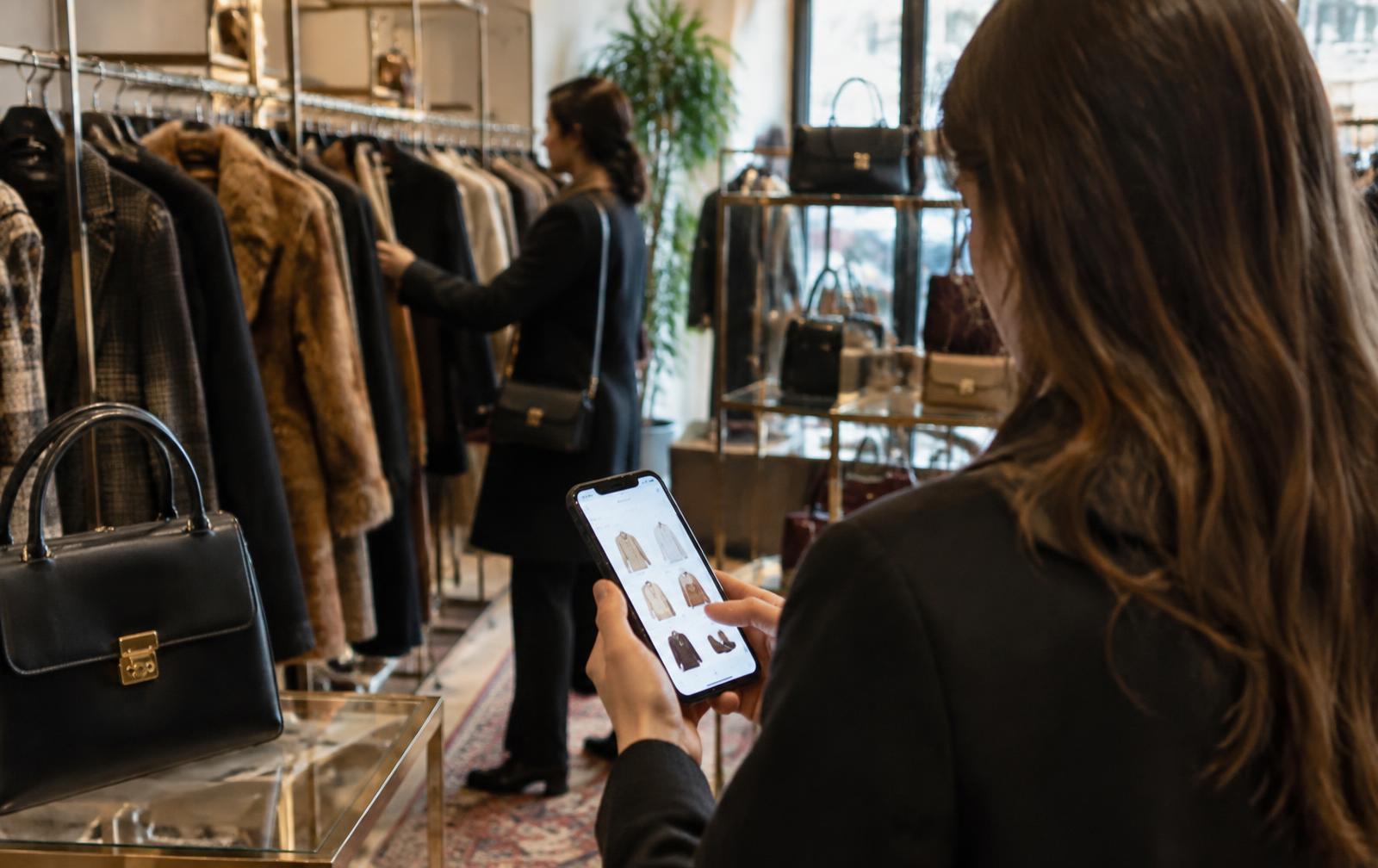
46% of shoppers discover resale products through social feeds, content creators and in-person browsing. This is a combined figure for discovery, not a share of sales.
48% use AI shopping tools at some point in their secondhand shopping journey.
63% say they are comfortable with agentic buying, where an AI assistant makes purchases on their behalf. That measures stated comfort, not how many purchases are actually made this way.
Brands bring resale in-house
More brands now run resale themselves or with a partner, rather than leaving it to independent marketplaces. Chloé's service with Vestiaire Collective is a clear example. Owners of eligible Chloé products with a Digital ID can use instant resale, with key product information already filled in. Sellers receive credit toward a new purchase on chloe.com, and eligible bags and shoes can take part.
The Digital ID is doing real work here: it removes much of the effort of listing an item. It is the same kind of product data the EU wants to require through digital product passports.
What it means for brands and retailers
This section is Style Serum's analysis, not reported fact.
Fix product data first. Reliable listings, condition grading and product information matter more than an AI shopping strategy. The survey measures willingness to use AI, not autonomous buying volume.
Treat store credit as a test. Credit-based trade-in may bring customers back, but Chloé's service design alone does not prove higher retention or profit. Track it.
Plan in scenarios. Use growth forecasts to frame best and worst cases, not as an inventory guarantee.
Count every cost. Measure customer acquisition, sell-through, returns and the cost of processing each item separately.
For more on circular business models, see Sustainable Fashion and Business of Fashion.
Sources
ThredUp: Resale Report 2026, 2026 edition
Retail Dive: US resale market to surpass $78 billion in 2030, 3 April 2026
Chloé x Vestiaire Collective, accessed 8 November 2026

Written by
Vasundhara ChopraContributing Editor, Fashion Business & India
NIFT-certified stylist with an MA in Luxury Brand Management from Regent's University London, covering fashion business, retail and Indian fashion.