Fragrance Wardrobes: Why Scent Layering Is Becoming a Retail Strategy
Shoppers are mixing scents and changing them through the day. With fragrance now beauty's third-largest category, brands are building pairing tools and products around the habit.
By Vasundhara Chopra ·
From signature scent to fragrance wardrobe
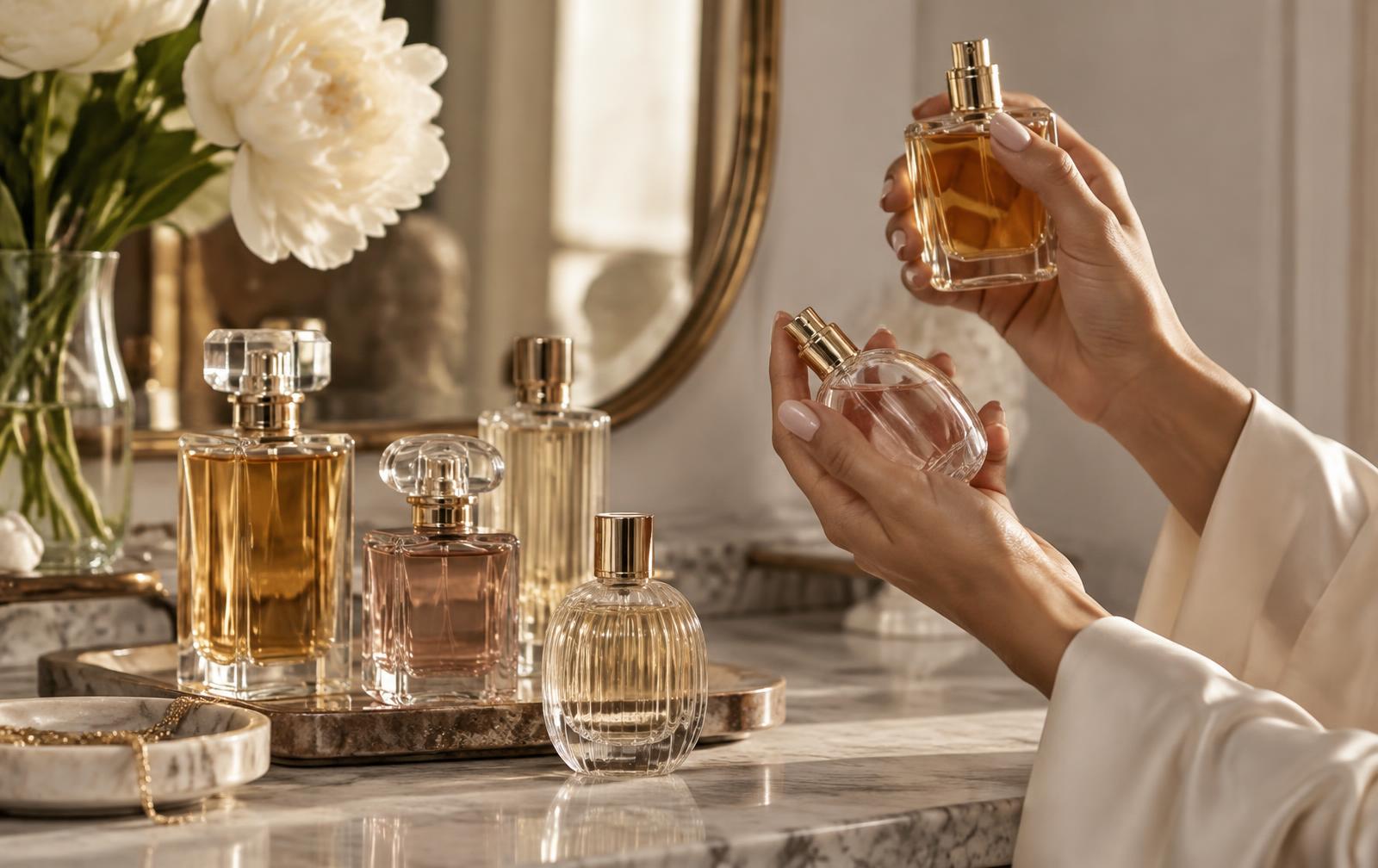
For decades, fragrance was sold as a signature: one scent that defined you. That pitch is loosening. In its State of Beauty analysis published on 18 June 2026, McKinsey describes consumers layering scents to create their own combinations, and changing scents by time of day or by where on the body they apply them.
Layering is not new — perfumers and enthusiasts have always mixed scents — but brands are now turning the habit into a selling proposition, with pairing tools, numbered collections and discovery formats.
The size of the opportunity
McKinsey forecasts that core beauty — skin care, hair care, colour cosmetics and fragrance — will grow by about 5% a year to reach $590 billion by 2030. Its model uses current prices and exchange rates fixed at 2025 levels.
Within that, fragrance has overtaken colour cosmetics to become the third-largest core beauty category, according to the report. McKinsey expects fragrance to keep growing across price tiers, supported by:
prestige and niche scents
masstige and entry-prestige challenger brands
designer fragrance houses
These are figures for beauty and fragrance as a whole. There is no published measure of how much of that spending comes from layering.
How brands are selling the habit
Jo Malone London offers an interactive scent-layering tool on its website: shoppers choose a cologne, then a second scent to combine with it. The brand describes Peony & Blush Suede as adding warmth and Grapefruit as adding an uplifting citrus note.
KAYALI numbers each of its fragrances, which makes pairings easy to name. In an October 2026 article, the brand recommended Vanilla | 28 as a layering partner for Yum Pistachio Gelato | 33.
Both approaches lower the risk for shoppers: instead of guessing which scents work together, they are given a tested combination.
Where shoppers discover scent
McKinsey's figures show that e-commerce now accounts for 28% of beauty sales globally, compared with 19% for grocery and 18% for specialty beauty stores. These shares cover all beauty, not fragrance alone. The firm also reports that US beauty sales on TikTok have grown at triple-digit rates since 2023, and projects about $4 billion for 2026 — a forecast, not a final figure.
That creates a tension for fragrance. Scent is hard to judge on a screen, yet more discovery is happening online. Layering guides, short videos and sample sets are ways brands try to bridge that gap.
What it means for brands and retailers
This section is Style Serum's analysis, not reported fact.
Sell pairs, not just bottles. Pairing guides, layering sets and minis reduce the uncertainty of mixing scents. Measure whether they lift conversion and basket size rather than assuming they do.
Keep entry points open. McKinsey's multi-tier growth thesis suggests room for accessible sizes alongside full prestige bottles.
Train the shop floor. Layering is a conversation; store teams need simple, consistent pairing advice.
Join up online and in store. Use digital tools to suggest pairings, and make sure samples or testers are available where the purchase happens.
Fragrance and beauty brands will gather at Cosmoprof Worldwide Bologna in March 2027 and in-cosmetics Global in April 2027 — see our events calendar. For packaging colour ideas, read our explainer on Luminous Blue, and find more in Beauty Innovation.
Sources
McKinsey & Company: State of Beauty, 18 June 2026
Jo Malone London: scent layering, accessed 8 November 2026
KAYALI: Vanilla | 28 and Yum Pistachio Gelato | 33, 20 October 2026

Written by
Vasundhara ChopraContributing Editor, Fashion Business & India
NIFT-certified stylist with an MA in Luxury Brand Management from Regent's University London, covering fashion business, retail and Indian fashion.