Andersson Bell and Wooyoungmi: Two Ways to Make a Korean Designer Brand Legible
Official brand and fashion-institution profiles reveal distinct positioning strategies, without exposing private sales or profitability.
By Style Serum Editorial Desk · · Edited by Vasundhara Chopra
Two brands, not one national formula
Korean designer fashion is often discussed as if a shared country of origin explains a shared business model. Andersson Bell and Wooyoungmi demonstrate why that shortcut is inadequate. Their official descriptions emphasize different creative propositions: cultural contrast in one case, a considered wardrobe of tailoring, materials and detail in the other. Those differences offer a more useful starting point for buyers and founders than an all-purpose category called K-fashion.
This comparison uses published institutional and brand material. The commercial lessons below are explicitly source-based interpretation, not findings from company accounts, proprietary retail data or interviews. A coherent public identity can help explain a brand’s offer; it does not, by itself, establish profitability, production scale or customer retention.
Andersson Bell: contrast as an organizing idea
According to Andersson Bell’s official history, the label launched in Seoul in 2014, inspired by the contrast between Korean and Scandinavian cultures. The brand explains that Andersson draws on a typical Swedish surname, while Bell refers to a traditional Korean temple bell. Its name therefore compresses the founding idea into a memorable pairing rather than merely indicating a geographic origin.
The same history says the label now blends various cultural elements instead of restricting itself to Scandinavian influences. That qualification matters. Describing Andersson Bell only as Korean minimalism filtered through Scandinavia would freeze an evolving proposition at its starting point. The official account presents cultural contrast as an expandable creative method, not a permanent limit on references.
The business interpretation is that an organizing idea can provide continuity without requiring every season to look identical. Buyers can ask whether new products still express a recognizable perspective even when references change. Founders can ask whether their own brand story gives a team a useful design criterion—or merely supplies attractive language after the collection is finished.
Wooyoungmi: a wardrobe proposition with room to expand
The Fédération de la Haute Couture et de la Mode profile of Wooyoungmi identifies it as a South Korean designer label founded by Youngmi Woo in 2002. Its description emphasizes luxurious fabrics, effortless tailoring and wearability, alongside artistic embroidery, subtle details, modern prints and the combination of traditional and technical elements. These are the institution’s descriptive terms, not independent laboratory assessments of garment quality.
FHCM also records that the originally menswear-only label expanded into womenswear in 2020, connecting that development to its neutral, androgynous appeal. This is a specific, documented category extension. It should not be inflated into an unsupported claim about the proportion of womenswear revenue, the size of its audience or the financial success of that expansion.
As business interpretation, the interesting point is continuity between an established design language and an adjacent wardrobe. Expansion can be easier to understand when the new offer shares recognizable values with the old one. That does not mean every menswear label should add womenswear. A convincing creative connection still needs product development, sizing, merchandising and demand validation.
What a buyer should compare
A retailer comparing these labels should begin with customer use, not a contest over which is more authentically Korean. What role will the product play in the assortment? Is the store seeking a strong statement, an everyday wardrobe anchor or a combination? Which pieces make the design proposition understandable when separated from runway styling and displayed beside other brands?
For Andersson Bell, a useful buying question is how the selected pieces communicate contrast as a coherent edit. For Wooyoungmi, it is how tailoring, fabric and detail translate into an identifiable wardrobe for the intended customer. These questions follow from the official descriptions; they do not presume that either brand sells only one kind of product.
Then examine the physical and commercial evidence separately. Construction, fit, composition and care requirements need direct verification at product level. Wholesale prices, delivery arrangements and stock availability require current documentation from the seller. A persuasive institutional profile cannot answer those operational questions, and a retailer should not treat recognition as a substitute for due diligence.
What a founder can borrow—and what not to copy
The transferable lesson is not to combine cultures mechanically or add a new category on a fixed anniversary. It is to build an identity that connects language, product choices and future development. Andersson Bell’s name illustrates a concise founding explanation. Wooyoungmi’s FHCM profile illustrates how a wardrobe vocabulary can accommodate a documented expansion without abandoning its underlying character.
A practical exercise is to write three short statements: what the brand consistently values, how customers can recognize that value in a garment, and what kinds of expansion would remain credible. Test the statements against actual samples. If the words could describe almost any label, they are unlikely to help a buyer distinguish yours.
Takeaways: specificity travels better than a category label
The official sources support dates, founding narratives and stated design characteristics. They do not disclose margins, channel economics or a universal recipe for international growth. Keeping that boundary visible makes the comparison more useful, not less ambitious.
For buyers, assess each label’s distinct place in the assortment. For founders, make the creative proposition recognizable at product level before treating visibility as proof of a durable business. Korean origin provides context, but specificity explains the offer. Andersson Bell and Wooyoungmi are instructive precisely because their public identities cannot be reduced to the same story.
Continue the analysis
This discussion connects with How to Read Modern Hanbok: A Museum-Led Guide and Behind K-Fashion: KOFOTI and Korea’s Textile Sourcing Ecosystem. Explore the full K-Fashion section for related coverage.
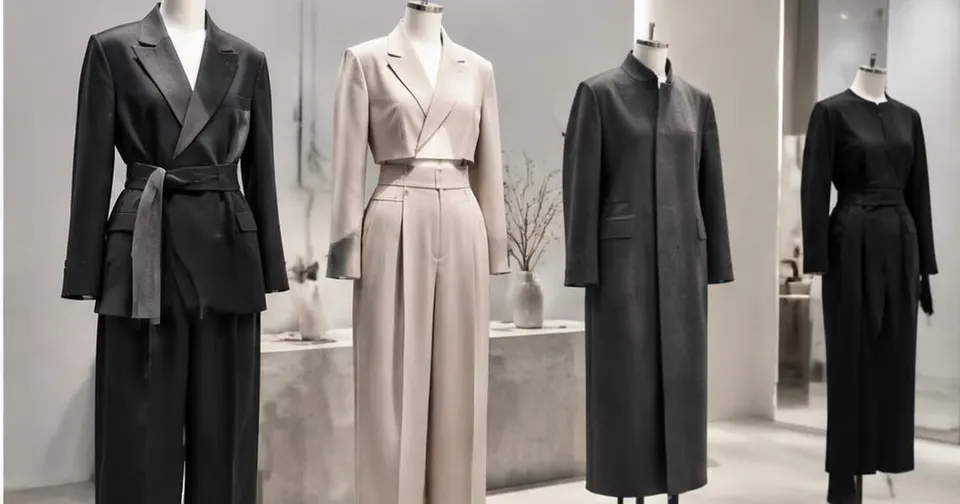
Editorial note: This is source-based explanatory analysis, not firsthand reporting or a supplier audit. The cover is an AI-generated editorial illustration, not a photograph of a named company, designer or event.
Style Serum Editorial Desk
Source-based industry explainers
Explanatory analysis prepared from the official sources cited in each article. No original interviews or supplier audits are implied.

Reviewed by
Vasundhara ChopraContributing Editor, Fashion Business & India
NIFT-certified stylist with an MA in Luxury Brand Management from Regent's University London, covering fashion business, retail and Indian fashion.