
How to Read Modern Hanbok: A Museum-Led Guide
Use the V&A’s hanbok resources, Tchai Kim and Guiroe to understand adaptation through garments rather than stereotypes.
By Style Serum Editorial Desk · · Edited by Vasundhara Chopra
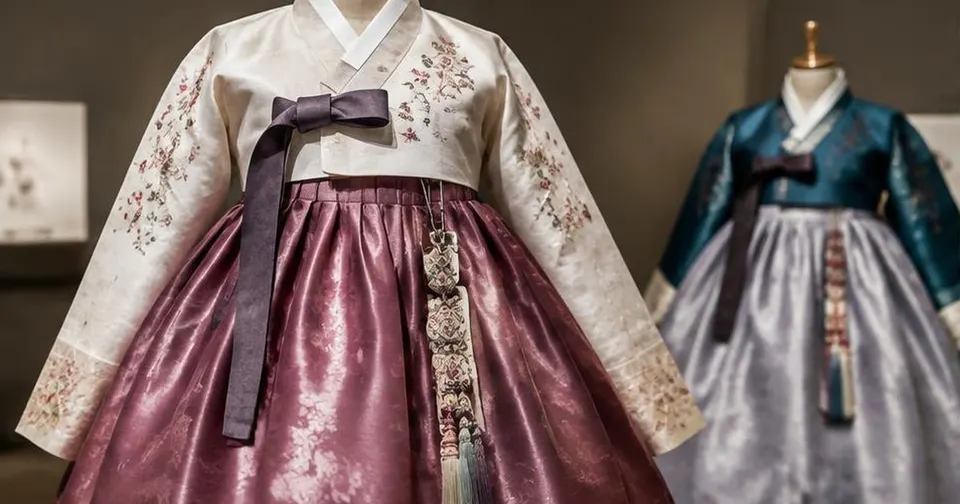
Begin with change, not a frozen costume
Modern hanbok is easier to understand when tradition is treated as something designers work with, rather than a fixed silhouette they either preserve or abandon. A garment can retain a relationship to Korean dress while changing its intended wearer, occasion or construction. The useful question is not simply whether it looks old or new, but which elements have moved and what those changes make possible.
The V&A’s introduction to hanbok explains that the term means Korean clothes and emerged in the late nineteenth century to distinguish local dress from incoming Western styles. It describes how Western clothing later became dominant in everyday use, while hanbok became more closely associated with ceremonies and celebrations. Contemporary reinvention therefore concerns patterns of wearing as well as appearance.
Use museum resources without promising a current display
The V&A’s hanbok material is associated with its London presentation of Hallyu! The Korean Wave. The official exhibition page states that the South Kensington exhibition ran from 24 September 2022 to 25 June 2023 and is closed. Its online resources remain useful, but they are not evidence that a particular garment is currently on public display.
For a physical visit, check current gallery information and object availability separately. For an online study session, start with the general hanbok article, then move to the designer films. This sequence supplies historical context before asking how individual practitioners reinterpret it. The guide below proposes a viewing method; it does not claim that the museum endorses a single definition of modern hanbok.
Tchai Kim: follow the transformation of a garment type
The V&A’s feature on Tchai Kim introduces designer Young Jin Kim as a maker of both custom traditional hanbok and contemporary ready-to-wear reinterpretations. It names traditional categories including dansokkot, chima and jeogori, and describes an intuitive, hybrid approach combining global styles with local folk culture. That range makes it unhelpful to divide her practice neatly into authentic tradition on one side and unrelated fashion on the other.
The feature identifies the Cheollik Dress as a signature ready-to-wear item based on a traditional horse-riding outfit for men. That is a concrete starting point for close looking. Instead of saying only that the dress is traditional-inspired, ask how a historical garment category becomes a contemporary proposition. Consider the relationship between movement, silhouette and intended use without assuming every detail has remained unchanged.
The same museum resource introduces her Shamanism Collection from 2020. Treat that collection as a particular creative project, not a universal explanation of Korean religion or of hanbok. When an interpretation draws on cultural practices, accurate naming and attribution are more informative than vague descriptions such as mystical or exotic. Watch the designer’s account before assigning meanings to visual details.
Guiroe: look at the meeting of tailoring systems
The V&A’s Guiroe feature records that Seonock Park established the contemporary brand in 2015. It describes her specialization as tailored men’s suits combining elements of traditional Korean dress and Western fashion. The accompanying film addresses materials, techniques, inspiration and her relationship with traditional Korean fashion.
The useful comparison with Tchai Kim is not which designer is more traditional. Their documented starting points differ. One featured example transforms a historical riding outfit into a dress; the other brings Korean dress elements into the category of the tailored men’s suit. Both invite questions about how recognizable garment languages can interact, without requiring a simplistic choice between Korean and Western identities.
When watching the Guiroe film, make separate notes on what the designer explicitly explains and what you infer from looking. A visual resemblance is not proof of a construction technique. If a collar, fastening or layered shape attracts your attention, identify it descriptively first, then check whether the film supplies a more precise explanation.
A close-looking checklist for viewers and shoppers
Start with proportion. Note where the garment creates volume and where it directs the eye. Then examine how the pieces relate: a photograph may show an ensemble rather than a single garment. Ask what is visible and what remains hidden. A front view cannot establish the entire fastening system, internal structure or range of motion.
Next distinguish material appearance from material identification. A fabric that looks crisp, sheer or glossy on screen has not thereby been identified as a particular fibre. Consult object information or the maker’s description before naming it. This discipline is especially important when images are reused in shopping guides, where a mistaken material claim can become a practical purchasing error.
Finally consider occasion and wearer. Does the source describe custom work, ready-to-wear or a collection made for presentation? Those categories create different expectations about fit and access. Someone buying modern hanbok should request measurements, closure details and care information rather than assuming that a familiar-looking silhouette guarantees familiar sizing.
Takeaways: name the designer and the design decision
These museum sources make modern hanbok legible through specific people and garments. They support a richer vocabulary than costume, fusion or timeless tradition. Name Tchai Kim or Guiroe, identify the relevant garment or collection, and explain the documented relationship to earlier dress before offering your own visual interpretation.
The broader lesson is methodological: historical context, designer testimony and close looking belong together. None replaces the others. Used in that sequence, the V&A resources help viewers recognize contemporary hanbok as active design work—and help shoppers, writers and visitors discuss that work without flattening it into a generic symbol of Korea.
Continue the analysis
This discussion connects with Behind K-Fashion: KOFOTI and Korea’s Textile Sourcing Ecosystem and Exporting K-Fashion: Localize the Product Information, Not Just the Campaign. Explore the full K-Fashion section for related coverage.
Editorial note: This is source-based explanatory analysis, not firsthand reporting or a supplier audit. The cover is an AI-generated editorial illustration, not a photograph of a named company, designer or event.
Style Serum Editorial Desk
Source-based industry explainers
Explanatory analysis prepared from the official sources cited in each article. No original interviews or supplier audits are implied.

Reviewed by
Vasundhara ChopraContributing Editor, Fashion Business & India
NIFT-certified stylist with an MA in Luxury Brand Management from Regent's University London, covering fashion business, retail and Indian fashion.
More in K-Fashion
Seoul Fashion Week Is a Trade Platform, Not Just a Runway
Style Serum Editorial Desk ·
Andersson Bell and Wooyoungmi: Two Ways to Make a Korean Designer Brand Legible
Style Serum Editorial Desk ·
Behind K-Fashion: KOFOTI and Korea’s Textile Sourcing Ecosystem
Style Serum Editorial Desk ·